How do you create the desired SHIFT?
Our structured coaching model
In a world of constant change, 70% of all initiatives fail. Our coaches developed the SHIFT! model to structure change and implement it with a stronger focus on people and their motivations. Discover more!
Johan Van Eeckhout

In today’s reality, change in the workplace is constant. Yet approximately 70% of all change initiatives in organizations fail. Why? Often, these initiatives lack the necessary structure or sufficient buy-in to be fully implemented. Change is not a binary switch that can simply be flipped — it is a process that requires commitment and vision. To help build this new reality, we developed the SHIFT! coaching model.
It is a model designed to structure coaching conversations while placing strong emphasis on the people involved in the change. After all, it is people — not just processes — who drive real change.
The SHIFT! coaching model for coaching conversations
- Specify your Goal
- Honour & explore reality
- Identify obstacles
- Find resources
- Turn into actions
- Be Alert!
Do you want to become a coach? Discover our ultimate coaching starter guide!
The SHIFT! coaching model for coaching conversations
The SHIFT! Coaching model was developed to guide change with a strong focus on people. We know that change is not as simple as it may seem. In fact, it often goes against human nature. Change requires energy and motivation from everyone involved.
This has a clear neurological explanation. People respond to stimuli based on past experiences. From each experience, we draw conclusions and form beliefs. The more often we experience similar situations, the more automatic our responses become. It is no coincidence that we refer to this as the power of habit.
Our brains can be compared to a highway system. Connections are constantly formed, and the more often we repeat certain patterns, the stronger those neural pathways become.
A coach helps you look at your current reality differently, allowing you to make new and appropriate choices from a conscious mindset — rather than operating on “autopilot.” When you learn that a few negative experiences are not necessarily representative of reality, it becomes easier to overcome fears or limiting beliefs.
The idea behind our coaching model comes from the concept of shifting gears. We invite people to pause, and sometimes even shift back into neutral, in order to move forward into the next gear. We use this model to structure coaching conversations so that action can be taken from a clear vision and strong motivation.
Sometimes we must dare to take a new path — and that is not always easy. Our brains naturally prefer the path of least resistance: the autopilot. You can compare this to a dirt road with deep tire tracks. Even when you try to drive into a new track, you may slide back into the old one. With the SHIFT! Coaching model, we provide a structured way to map the desired shift, consciously choose a new path, take action, overcome obstacles along the way, and ultimately reach your desired destination.
Specify your goal
The first step in a coaching conversation is defining and clarifying the right goals. Start by asking yourself what change you want to see. What is the desired Shift!?
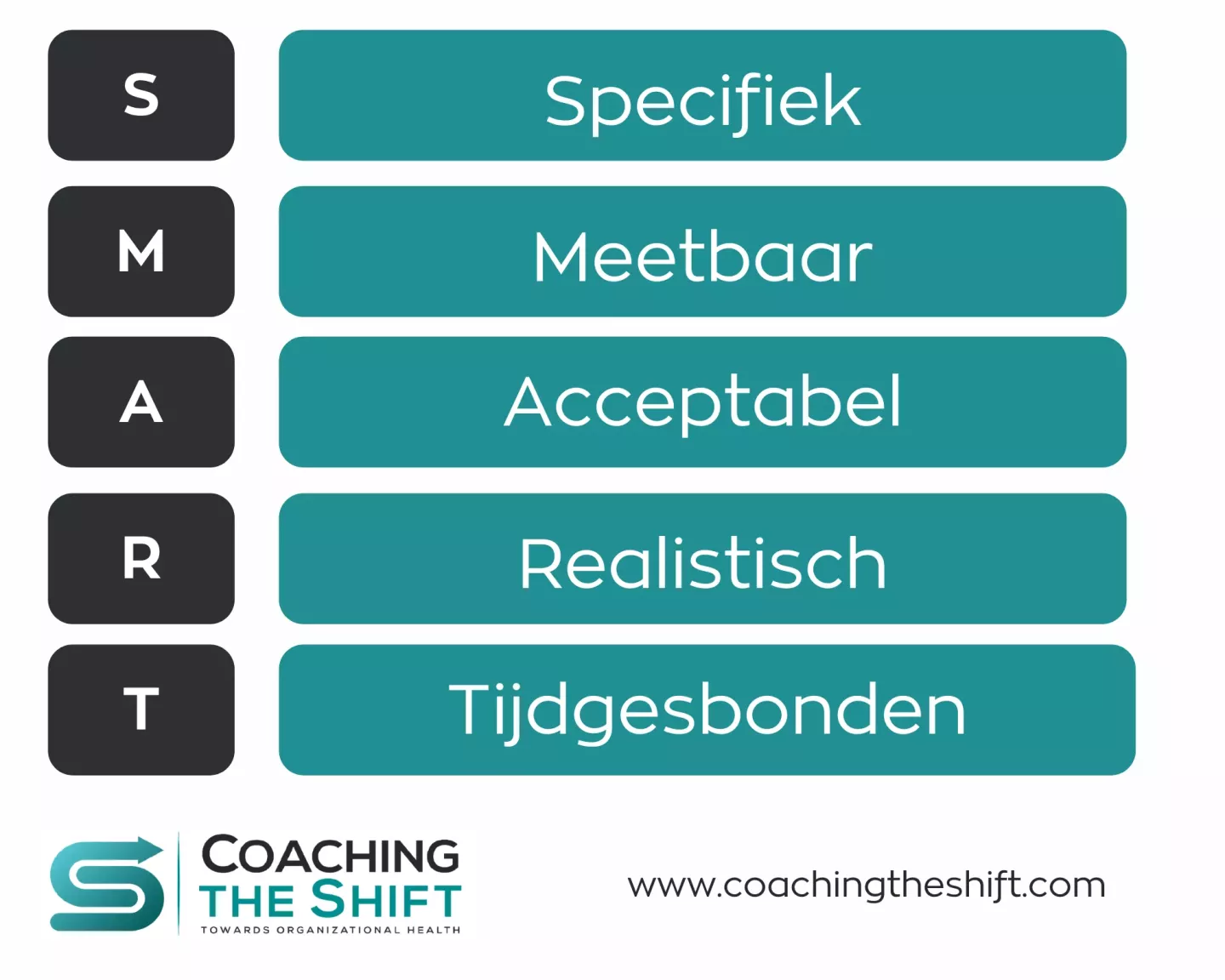
To make goals as concrete as possible, we use the SMART model, which stands for:
- Specific – Are the goals specific enough to take action? Is there clarity about the direction you want to move in? Make sure you understand why you want to achieve the goal and that everyone involved is informed about it.
- Measurable – Can progress be measured? This can be done by quantifying goals or by attaching conditions to them. For example, if you want to develop a new skill, you might set a goal to practice twice a week for 60 minutes.
- Accepted – Is there sufficient buy-in for the goal you want to achieve? Ideally, everyone in your team or organization supports the goal. When a goal is imposed by senior management without team support, it often leads to demotivation and the goal being deprioritized.
- Realistic – Are your goals achievable? This may sound obvious, yet it is often overlooked. Is it clear which steps you need to take, or do you have no idea where to start? Finding the right balance between challenging yourself and staying realistic is key to maintaining motivation. For example, when setting sales targets, it is important to understand when goals are too ambitious or too modest — and how this impacts motivation and performance.
- Time-bound – When will you start? By what deadline do you want to achieve the goal? Adding a time constraint increases motivation. Goals without deadlines often remain vague and lack clear expectations. It is better to set smaller goals and re-evaluate them afterward.
Self-development is a journey of discovery, wonder, and learning. Are you ready to become a professional coach? Seize your opportunity!
A key element to understand is the underlying motivation behind the desired Shift! Why do you want to achieve this goal? Also consider the individual motivations connected to it. If you are implementing an organization-wide change, what are the benefits for employees at every level?
Finally, it is important to create a clear picture of what success looks like. Try to visualize not only the final destination, but also how it feels and what benefits it brings.
By using this coaching model to create a clear vision, you not only bring clarity to the goal, but also increase motivation. Think of someone training for a marathon. The road toward it can be challenging and even painful at times, but when you imagine the moment of crossing the finish line, the investment becomes completely worthwhile.
Honour & explore reality
First and foremost, it is important to acknowledge the coachee’s existing potential. Look for people’s talents and strengths and show appreciation for them. When someone works from their strengths, they not only gain more confidence but also more motivation. That is why it is always a good idea to leverage these strengths to support the Shift!
Show appreciation for the coachee’s strengths and for the initiatives they have already taken. In some cases, the coachee may have already attempted to create change. It is important to uncover this during the coaching conversation and to ask follow-up questions about their underlying reasoning. Does it still feel right for them?
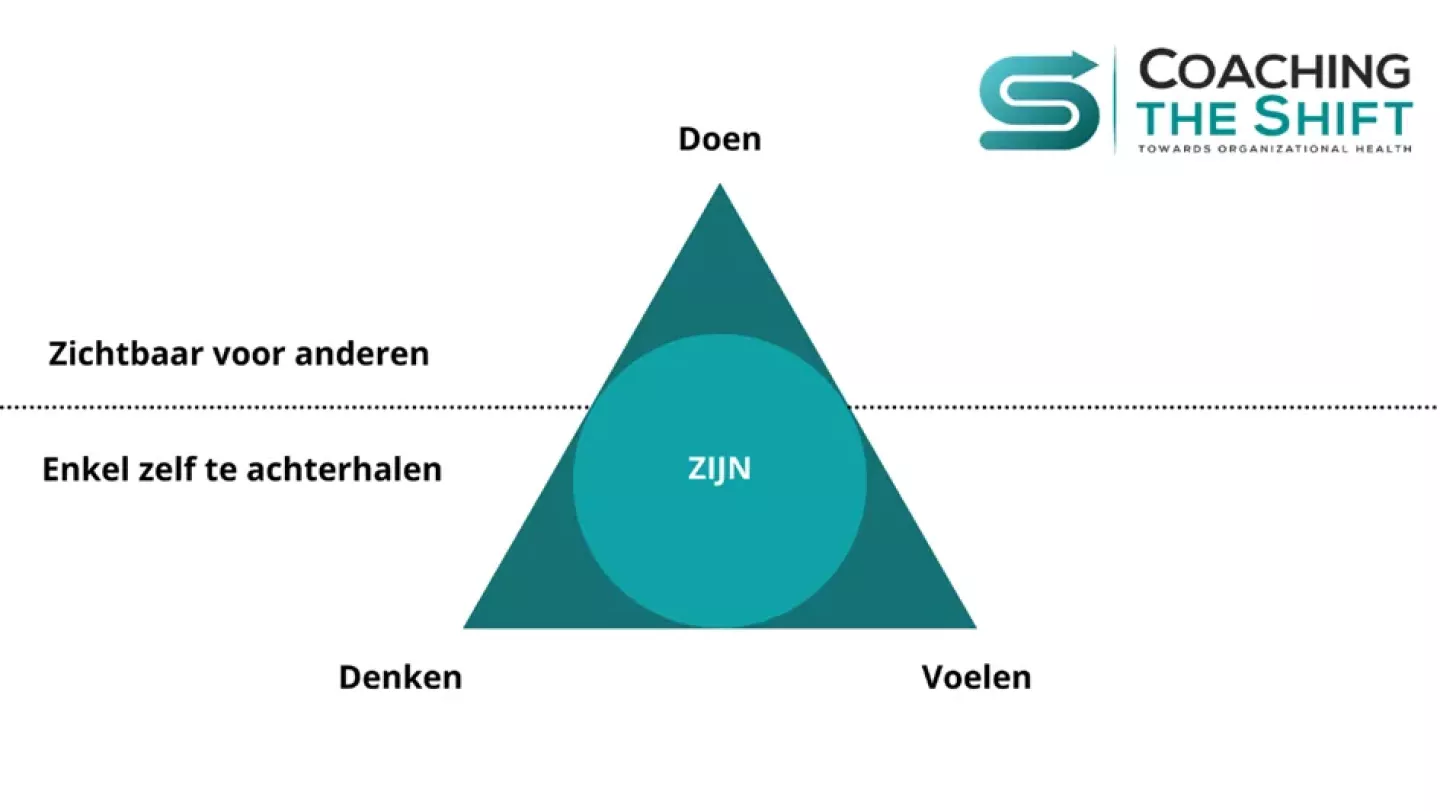
In addition, this coaching model invites you to explore how the coachee thinks, feels, and acts in order to understand how they are (co-)creating and sustaining the current situation. Too often, we focus only on the actions someone takes, without exploring the intentions or thought processes that lead to those actions.
Identify obstacles
During the coaching conversation, it is equally important to uncover the obstacles. What is currently standing in the way of the Shift!? What “benefits” does the current situation offer the coachee? Sometimes, the coachee feels perfectly comfortable in the present situation, which means the motivation to change is not always present.
When the motivation for change is lacking, there is a risk of self-sabotage. In this case, the coachee — consciously or unconsciously — looks for reasons not to implement the change. With the SHIFT! coaching model, the goal is to gain insight into and understanding of the underlying concerns and needs the coachee has regarding the change. This allows you to address these concerns in time and prevent future issues.
Find resources
With the SHIFT! coaching model, you also aim to create a shift in the coachee’s mindset. You can do this by exploring which thoughts, emotions, and actions would be more helpful in achieving the desired Shift!
Look for potential resources available to the coachee. These can include internal resources, such as tools or routines, as well as external resources, such as coaching or guidance. By taking both internal factors and the surrounding environment into account, you can better anticipate the opportunities and threats the coachee may encounter.
Finally, in this phase of the coaching conversation, you want to create a list of the different options available to the coachee. For each option, you then weigh the pros and cons.
Turning into actions
Real change, of course, does not stop at a coaching conversation. You want to capture the key insights from the conversation and translate them into concrete actions. You can do this by using the 5 W’s:
- Who is involved in creating the Shift!?
- What actions will you take? What is the underlying goal of these actions?
- Where will these actions take place? In which environment will you act, and which factors in that environment will influence you?
- When will you take action? What else is happening at that moment?
- Why are you taking action? What are the benefits and underlying motivations for change?
Make it clear that the coachee is in the driver’s seat of their own change. This time, list which actions the coachee wants to stop, start, and continue. Are there actions they are already taking? Are there behaviors that are currently holding the change back?
Finally, try to anticipate potential challenges in advance — just like shifting gears ahead of time when driving. Ask yourself what could go wrong and how you want to deal with it. What if you miss one day of your routine? Will you let that derail the entire Shift!?
Be Alert!
Encourage the coachee to continue monitoring progress and to embed the change into existing processes and habits. The importance of this was confirmed in a ten-year study by Belbin. We speak of embedding when a change becomes part of the daily thinking and behavior of an organization, team, or individual. In other words: when does “the new path” become the one everyone follows?
During the coaching conversation, ask the coachee how they will monitor their own learning process. Are there procedures in place to review progress on a regular basis? This final step in the coaching model is indispensable and often determines whether the change succeeds or fails.
Finally, agree on how the coachee plans to celebrate successes and how they will anchor the Shift! in their behavior. It is important to sustain the change even after the program ends, rather than falling back into old habits. Regular follow-up, reflection, and adjustment where needed are therefore essential to guaranteeing lasting change.
Conclusion
Seventy percent of all change initiatives fail. Change is not simply about mentally “flipping a switch”; it also involves uncovering the underlying — and sometimes complex — motivations, assumptions, and beliefs. Once people are able to name what they were previously less aware of, they can make new and more conscious choices.
Successful change is based on consciously made decisions, well aligned with the coachee’s clear vision and goals, within their context — and therefore also aligned with the organization’s vision and objectives. With the SHIFT! Coaching model, we structure coaching conversations to map out and implement the desired change, always with a strong focus on the people behind the change.
How do you create the desired SHIFT?
Register for one of our information sessions and discover how coaching can help you!