Thinking, Feeling, Doing – the DVD coaching method
Why do some people remain stuck in the analysis phase, while others act without thinking? This coaching method explores how thoughts, feelings, and behavior influence one another. Apply it yourself with our free worksheet!

Eva Buyck

How do what we think, feel, and do influence each other—and our lives? Why do some people remain stuck in the analysis phase, while others act without thinking? With the DVD coaching method, you explore how different elements such as thoughts, feelings, and behavior influence one another.
How do you recognize limiting thoughts, and what can you do to replace them with new, empowering ones? Discover it in this article!
- Thinking, feeling, doing – the DVD coaching model
- Thoughts – thinking differently leads to feeling and acting differently
- Feelings – why what we feel creates balance alongside thinking and doing
- Behavior – how what we do influences our thinking and feeling
- Coaching method: the 5G model for behavior change
Thinking, feeling, doing – the DVD coaching model
The DVD model, also known as the 3G model (thoughts, feelings, behavior), is a framework that explores the connections between thinking, feeling, and doing. In short: what we think and do influences how we feel—and vice versa.
This model originates from behavioral science and is closely linked to cognitive behavioral therapy. It assumes that dysfunctional behavior, such as avoidance or aggression, arises from our thoughts and/or emotions.

Making changes in thinking, feeling, and doing is a commonly used coaching method. This coaching model stimulates greater personal awareness by encouraging reflection and mindfulness. In this way, you can adjust one or more elements of the triangle to achieve better results.
Thoughts – thinking differently leads to feeling and acting differently
What many people don’t realize is that we spend most of our time with our own thoughts. That’s why it’s essential to become aware of what we think before we can understand how we feel and act. Our thoughts often move very fast, causing us to draw conclusions based on personal experiences that don’t always match reality.
Thoughts can work in two ways.
First, there are empowering thoughts. These build self-confidence and create a more optimistic outlook on life.
On the other hand, there are limiting thoughts—such as self-doubt, fear of failure, or fear of not being accepted. When these thoughts take over, they allow fear to run your life.
A healthy balance lies somewhere in between. Doubt, for example, can create space for self-improvement, while too much self-confidence can lead to blind spots. By becoming aware of your thinking patterns, you can replace thoughts that don’t serve your goals with new, more supportive ones.
In other words: change your thinking, change your life.
Download 30 free coaching questions to support your personal shift.
Thinking and doing
Thinking and doing without feeling is not a sustainable way to live. Ignoring your emotions for too long often leads to overload or burnout. Recognizing and regulating emotions is a core component of emotional intelligence.
Feelings – why what we feel creates balance alongside thinking and doing
Feelings or emotions function as signals. They arise from underlying human needs. When we experience strong emotions—such as joy, fear, sadness, or anger—they point to needs like acceptance, appreciation, or safety.
When emotions are ignored for too long, they inevitably influence how we think, feel, and act.
Learning to feel and regulate your emotions again is essential. Why do you feel this emotion? What context or circumstances led to it? When are you happiest—or most unhappy? By listening to your emotions, you learn to live a more fulfilling life.
Feeling and doing
Acting purely on emotion often indicates a lack of regulation, which can negatively impact your goals. A more effective approach is to first acknowledge your emotions and then consciously choose how to act.
For example, reacting out of anger in a conversation can distort your message. Or acting out of compassion for others may lead you to overextend yourself.
In another coaching framework, this behavior is described as stepping into drama roles within the drama triangle.
Thinking and feeling
Only thinking and feeling—without action—often leads to stress symptoms such as rumination, overanalysis, or anxiety. Behavior remains unchanged due to procrastination.
For instance, you may dream of a new career for years while continuing the same daily routine, despite what you think or feel. The most effective step is to expand your comfort zone by connecting action to your thoughts and feelings.
Behavior – how what we do influences our thinking and feeling
Finally, there is behavior—what we do. Our actions also influence how we think and feel. It is through action that a new reality is created. By choosing to act—or not act—we change our frame of reference, which in turn shapes both our self-image and our worldview.
The 5G reflection model explains how specific events influence someone’s thoughts and perceptions. Someone who experiences repeated success will, as a result of their actions, develop greater self-confidence over time.
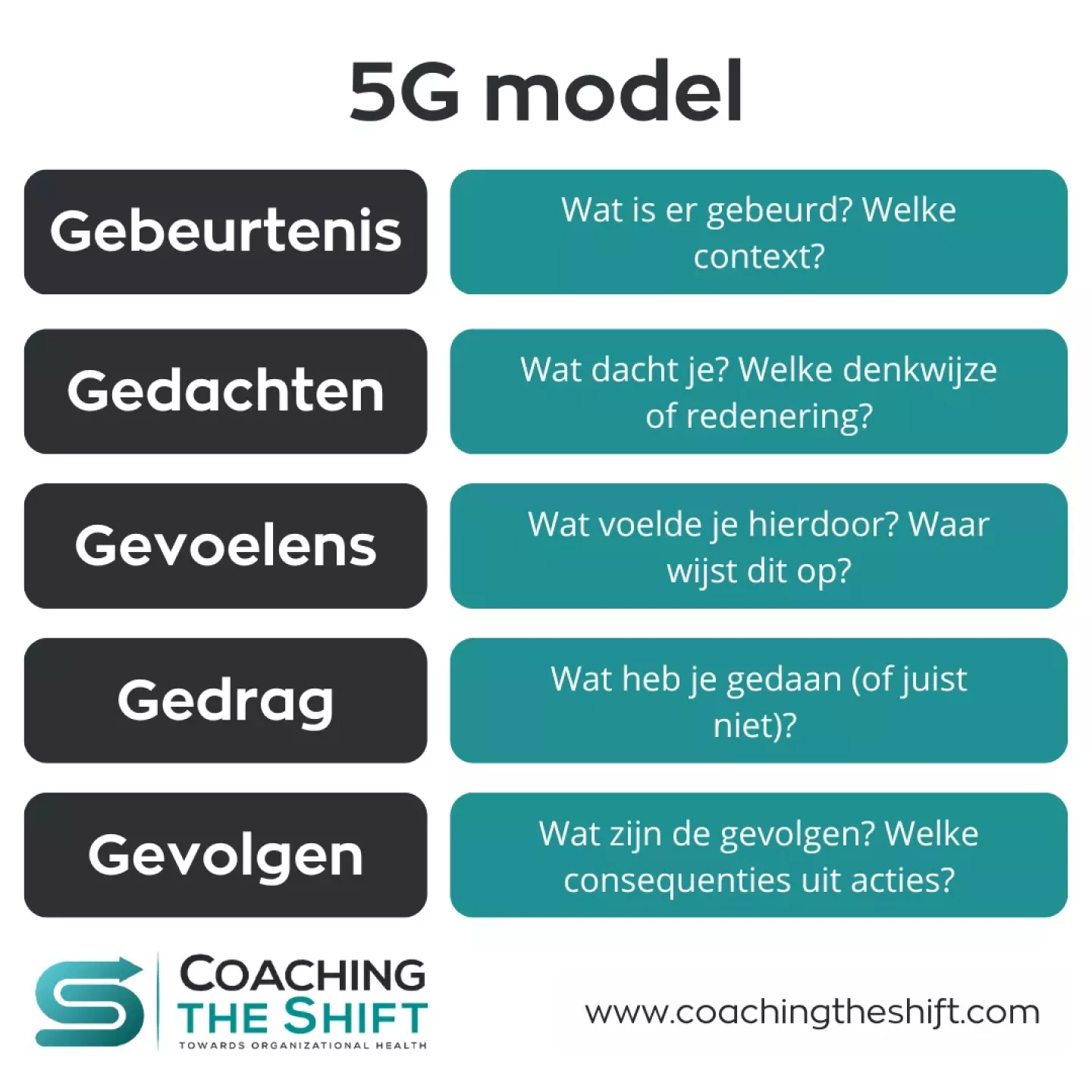
On the other hand, someone who has made a major mistake may experience a blow to their self-confidence. This can trigger a negative spiral in thinking, feeling, and doing.
Coaching method: the 5G model for behavior change
The 5G coaching method helps you see the bigger picture. This means looking beyond what is visible (behavior, doing) and also exploring what is invisible (thinking, feeling). You search for recurring patterns in the coachee’s thinking, feeling, and doing. Is there a clear cause-and-effect relationship—or not?
You can use the 5G model to reflect on the current situation and contrast it with an alternative, desired situation. Download your own worksheet here!

Ready for a shift? Get the 5G worksheet NOW via this link!
Veelgestelde vragen over
de DVD coaching methode
Other relevant articles