One simple habit to amplify the impact of your coaching conversations!
What makes a great coaching conversation?
As Master Coaches with thousands of conversations behind us, there is one habit that truly makes the difference: observation and reflection. A top coach is always looking for ways to improve. How can you make more impact in your next conversation? Discover more in the blog!

Dorothée Willems

Every coaching journey starts with the very first coaching conversation.
For many, this is often a challenging step. We struggle with asking the right questions, or we get too caught up in our own thoughts. But what truly makes a coaching conversation impactful? And which habits do Master Coaches use to get the most out of every conversation?
Discover how to get the most out of every coaching conversation in this blog:
- Practice makes progress: the power of observation & reflection
- (Self-)evaluation checklist: analyze your next coaching conversation
- 5 tips to maximize the impact of your coaching conversation
Practice makes progress: the power of observation & reflection
Coaching is a craft. Becoming a master coach is not just about theory, but above all about practice. The more experiences, perspectives, and even failures we carry in our backpack, the better prepared we are for a powerful coaching conversation.
The message is clear: practice, practice, practice!
Yet practice alone is not always enough—you can also develop ineffective habits. That’s why reflection after a coaching conversation is essential.
You can reflect on questions such as:
- What is already going well?
- What are your strengths in a coaching conversation?
- What are possible areas for improvement and pitfalls?
Becoming aware of your strengths and development points helps you make progress in every coaching conversation. On the one hand, you can lean into your strengths and facilitate conversations with more confidence. On the other hand, you can prepare more consciously and seek support to develop your blind spots.
But how do you reflect properly on a coaching conversation? First of all, reflection should never interfere with the conversation itself. When you are too focused on your own thoughts, feelings, and behavior, you risk losing the full presence that a professional coaching conversation requires.
Reflection therefore happens after the conversation. We recommend working with a recording—either audio or video. Of course, always ask for the coachee’s consent before recording and clearly share your intention. For example:
“If that’s okay with you, I’d like to record this conversation for my own analysis, so I can continue to support you and others even better.”
4 perspectives to learn from every coaching conversation
By listening back to or rewatching a coaching conversation, you often notice things you missed during the session. This can be done individually or in a group. You can reflect from different perspectives, such as:
- Self-observation – Reflect immediately after the conversation on your first impressions. What went well? What could be improved? Then study the recording. What specific observations do you make? What conclusions can you draw?
- Practice groups – Connect with a network of like-minded coaching professionals to exchange observations and feedback. Organize practice sessions together, share insights, and help each other grow.
- Supervision – Work with a Coach Mentor who regularly observes your coaching conversations, provides feedback, and follows up on your progress.
- Asking the coachee – Finally, you can also ask the coachee directly. How do they think and feel after the coaching conversation? In what way did you help? What could you do to make the conversation even more effective?
By applying this habit, you continue learning from every coaching conversation. Dare to challenge yourself and hold up a critical mirror. Below, we share several key aspects and tips to observe during a coaching conversation.
(Self-)evaluation checklist: analyze your next coaching conversation
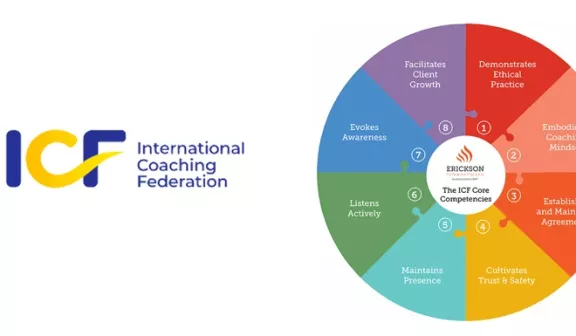
This self-evaluation checklist is a condensed version based on the 8 competencies of a professional coach as defined by the International Coaching Federation (ICF). Evaluate yourself or fellow coaches on the coaching conversation and identify areas for improvement.
The coach:
- Demonstrates a professional attitude and coaching mindset
- Sets the framework (goal, role, expectations)
- Questions the coachee to clarify the goal and desired outcome
- Structures the conversation (SHIFT!)
- Builds rapport and creates a safe environment
- Shows empathy
- Remains non-judgmental
- Is curious (listens to and explores concerns, perspectives, thoughts, etc. of the coachee)
- Uses silence to invite reflection
- Communicates clearly (no diminutives, clear questions, etc.)
Listening skills:
- Listens actively
- Explores the coachee’s words, statements, and perspectives
- Probes and explores emotions
- Observes and explores non-verbal communication
- Allows the other to finish speaking
- Reflects and summarizes the essence
Questioning skills:
- Asks powerful questions that expand awareness
- Varies questioning styles (thinking–feeling–doing questions, observation–analysis–conclusion questions, metamodel questions, etc.)
- Explores the underlying current such as intentions, fears, concerns, and beliefs
- Shares own observations and checks them with the coachee
- Asks direct, single, open questions and gives the coachee sufficient space to reflect
- Dares to reflect and test inconsistencies
- Invites the coachee to view situations from different perspectives (reframing, opportunities, stepping into another’s shoes, etc.)
Facilitates the coachee’s growth process:
- Explores insights and self-insights at the end of the conversation
- Supports the coachee in translating insights into SMART actions
- Anticipates obstacles in implementing actions
5 tips to maximize the impact of your coaching conversation
As a coach, your goal is to guide and support individuals, teams, or organizations in achieving their goals. The coaching conversation plays a crucial role in this. You facilitate a creative process of reflection and awareness that leads to insight and action. The coachee always remains responsible for their own decisions.
Below are several effective tips to keep growing after every coaching conversation.
1) Use real topics
When practicing coaching conversations, work with real themes. This keeps the experience more authentic and relevant. While role plays can offer insight into specific scenarios, coaching always starts from not knowing.
Practicing with real topics helps you sharpen all relevant coaching skills: observing expressions, dealing with real thoughts and emotions, and handling resistance or a fixed mindset.
2) Stay an OEN
As a coach, you must become comfortable with not knowing. It is not your role to provide solutions during a coaching conversation. You work from equality and the belief that the coachee already holds all the necessary solutions and capabilities.
This also means staying out of judgment. Avoid assumptions and continue to explore more deeply.
Stay an OEN:
- Open
- Honest
- Curious
3) Choose a learner mindset instead of a judger mindset
A judger mindset starts from judgment—you ask questions that confirm your own perception. A learner mindset, however, starts from the intention to understand better. You ask questions that broaden and enrich your perception.
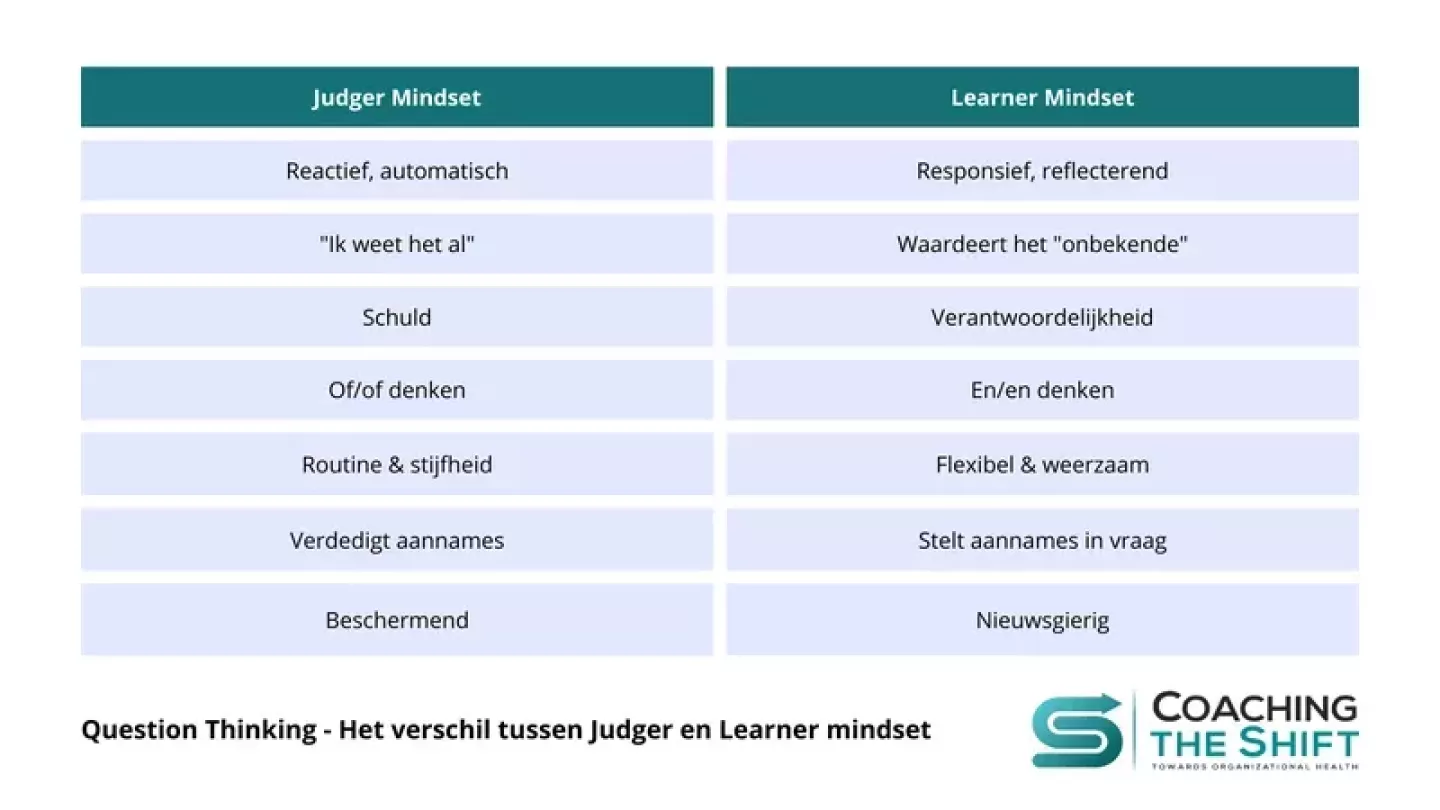
During a coaching conversation, we consciously choose to step into a learner mindset and stay out of judgment.
A helpful way to observe yourself during a coaching conversation is by paying attention to the type of questions you ask. For example, if you notice that you are asking too many closed questions, you are likely operating from a judger mindset.
4) Build a repertoire of coaching questions
To conduct a structured coaching conversation, it is essential to ask the right questions. Depending on the coachee’s needs, you will ask different types of questions. Do you want to help clarify goals? Or are you supporting the coachee in identifying obstacles or solutions?
That’s why it’s always useful to have a set of coaching questions ready that you can fall back on when needed.

5) Make the coaching conversation your own
Again, the more experience you gain, the smoother your coaching conversations will become. Every coach has a unique style. And while you can learn a great deal from existing tips, question lists, and examples, it’s important to add your own personal touch to the coaching conversation:
- Create your own framework
- Ask your own questions
- Explore different conversation techniques
- Become comfortable in your role as a coach
- Discover your own coaching style
As you gain more knowledge and experience, you will work more purposefully and with greater confidence. Your coaching style will continue to evolve alongside your ongoing development as a coach. The best coaches, however, keep challenging themselves and expanding their perspective.
Are you looking for a practice space and a community of coaches that challenges, inspires, and broadens you?
Veelgestelde vragen over
coachingsgesprekken en groeien als coach
Inschrijven voor onze nieuwsbrief?
Other relevant articles