From conflict to connection
Nonviolent Communication in four steps
As coaches, we are often asked: what are the most important communication tips or skills? And as is often the case, the answer lies in the fundamentals: active and empathetic listening. This is what truly allows you to create connection and look beyond symptom-based solutions.
Nonviolent Communication, also known as connective communication, is a conversational approach developed by Marshall Rosenberg. It starts from openness and the intention to genuinely understand one another.

Christine Esteingeldoir

Nonviolent Communication, also known as connective communication, is a conversational approach developed by Marshall Rosenberg. It is an ideal team workshop for fostering greater psychological safety, connection, and communication power.
Connective communication starts from openness and the intention to truly understand one another. As coaches, we are often asked: what are the most important communication tips or skills? And, as is often the case, the answer lies in the fundamentals: active and empathetic listening. This is what truly enables connection and helps you look beyond surface-level, symptom-focused solutions.
Discover in this article how to apply Nonviolent Communication in just four steps!
What is Nonviolent Communication? (Definition of connective communication)
- Connective communication in four steps
- Three empathic processes in Nonviolent Communication
- The impact and benefits of connective communication

What is Nonviolent Communication? (Definition of connective communication)
Nonviolent Communication, also known as connective communication, is an empathetic communication approach developed by Marshall Rosenberg. Rather than focusing on strategic communication — where the goal is to persuade, convince, or negotiate — Nonviolent Communication is rooted in the intention to connect.
In a team workshop on connective communication, you will learn how to:
- Express your own needs clearly and respectfully
- Listen without judgement or assumptions
- Give and receive constructive feedback
These skills form the foundation for safer, more open, and more meaningful communication within teams.
With connective communication, you adopt an open mindset. This means you are open to different perspectives and to feedback. In many organisations, difficult conversations are often avoided — simply because people don’t know how to engage with conflict in a constructive way.
Yet discussion and disagreement are essential building blocks for developing a high-performing team.

A team workshop on Nonviolent Communication helps teams engage in these conversations in a safe and effective way. Through Nonviolent Communication, you meet each other at the level of needs. Feedback then becomes not a personal attack, but a catalyst for awareness. By naming what is happening, invisible needs become visible, allowing both parties to search for solutions together. In fact, the use of connective communication can lead to 50 to 80% faster conflict resolution, saving a great deal of frustration and issues within teams and organisations.
Connective communication in four steps
Connective communication can essentially be seen as a form of pacing and leading. Instead of starting from your own standpoint, you first attune to the other person. By looking for common ground and shared goals, you engage in a conversation based on understanding rather than criticism.
In a team workshop, we work with four steps, as developed within Nonviolent Communication by Marshall Rosenberg:
- Observation
Name concrete facts, without judgement.
Example: “Yesterday, a decision was made with the whole team, except for me.” - Feeling
What is the impact of this situation on your emotional experience?
Example: “That makes me feel as if I’m not important enough.” - Need
Then explore the underlying, unmet need behind this feeling. What is this a signal of? Dare to look beyond the symptoms.
Example: “It’s important for me to be involved in decisions so that I feel like a valued part of the team.”
At the same time, the other person’s behaviour is usually driven by an underlying need as well.
Example: “For our team, it’s important to make decisions quickly so stakeholders don’t have to wait.” - Request
Finally, you look for solutions together. Your needs have been expressed; now you make a concrete proposal.
Example: “Would you be willing to give me a heads-up for future meetings?”
It’s essential to leave the other person free to choose and to respect their autonomy in whether or not they act on the request.

Although it takes some courage to name these things at first, it has a huge impact on team collaboration and well-being. Perhaps you weren’t invited to the team meeting because others assumed you were too busy — in other words, it may have started from a positive intention. In many organisations, these assumptions remain unspoken. As a result, both the team and the individual are left with unanswered questions, biases, and frustrations.
Three empathic processes in Nonviolent Communication
During a team workshop on connective communication, you look beyond symptoms such as dysfunctional behaviour and explore the underlying intentions and drivers behind that behaviour. When you understand the underlying needs of others — and of yourself — you are better able to respond constructively. Recognising the positive intention or context behind behaviour allows you to reframe actions or beliefs more effectively.
Within Nonviolent Communication, as developed by Marshall Rosenberg, we balance three forms of empathy:
1. Self-empathy
Self-knowledge is the beginning of all wisdom. Are you able to reflect and observe yourself from a distance? Do you understand the signalling function of your emotions, or do you tend to ignore or suppress them? Behind every emotion lies an underlying need.
By activating your self-observer, you can better understand self-judgement and inner criticism and translate them into underlying needs. A lack of (self-)appreciation, for example, often leads to doubt and negative thoughts — and vice versa. When ignored for too long, this can result in unproductive behaviour patterns such as perfectionism or fear of failure.
2. Empathic listening
The second process is the ability to listen empathically. Can you listen attentively enough to pick up on the other person’s underlying emotions? There are many signals to pay attention to, such as language use, tone of voice, speaking pace, non-verbal cues, and facial expressions.
Importantly, you always frame your interpretations as assumptions. You ask questions to better understand the other person — not to prove your point.
For example: “It seems as if… How do you see this?”
3. Empathic expression
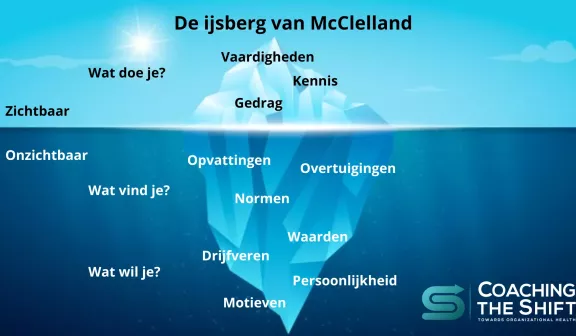
Finally, expressing yourself empathically is also a crucial part of connective communication. You want to give the other person insight into your underlying needs and values — in other words, you lower the waterline.
This includes:
- Naming the impact of behaviour or events on your feelings
- Communicating your needs and boundaries assertively
- Taking responsibility for your own feelings, rather than projecting them onto others
Why choose a team workshop on connective communication?
Connective communication starts from the positive intention to understand the other person, not to be right. It is therefore a powerful way to create open dialogue between two or more parties.
A team workshop on Nonviolent Communication offers several benefits:
- It brings structure to conversations
- It transforms criticism into constructive feedback
- It is rooted in mutual respect
- It lowers the threshold for open dialogue in the workplace
- It makes frustrations within teams discussable — and therefore workable
- …
Would you like to invest with your team in stronger communication, deeper connection, and more constructive collaboration? Then this team workshop on connective communication is exactly what you need. During the session, we combine insights with practice, reflection, and concrete conversation techniques — so your team can apply them immediately: on the work floor, in meetings, or in one-on-one conversations.
Experience the impact of connective communication for yourself during a team workshop!
Veelgestelde vragen over van conflict naar verbinding: geweldloos communiceren in 4 stappen
Inschrijven voor onze nieuwsbrief?
Other relevant articles