Breaking the negative spiral | completing the 5G model
A negative spiral arises when you spend too much time dwelling on the past. What went wrong? What could you have done better? It creates a kind of selective attention that colors both our perception of reality and our self-worth. But how do you break this spiral? Discover it here!

Magaly De Smet

The 5G model is a reflection framework that provides insight into your thoughts, feelings, and behavior. In this way, you can better understand (automatic) dysfunctional behavior and therefore act more consciously and effectively in the future. Discover in this blog how to complete the 5G model to break a negative spiral!
How do you get stuck in a negative spiral?
The 5G model
Breaking the negative spiral: completing the 5G model
How do you get stuck in a negative spiral?
Thoughts are powerful. A negative spiral arises when negative thoughts create a form of selective attention. Because your focus is overly directed toward the negative, you amplify the things you feel dissatisfied or insecure about. In other words, it colors your perception of reality.
What we think not only influences our perception; it also affects how we feel and the image we have of ourselves. As a result, we may miss opportunities or simply lack the confidence needed to seize the right ones.
“You think you are a failure, you feel like a failure, and you behave like a failure.”

But thoughts can also work in your favor. Think back to moments in your life when everything seemed to go well effortlessly. Recognition and positive feedback often give a boost to our self-confidence. As a result, you dare to take action from empowering thoughts such as “I can do this, I know it’s possible, we are making progress” — leading to even better results.
In this case, we speak of a positive spiral. The secret is not to let setbacks stop you, but to keep riding the momentum of small wins and successes.
The 5G model
The 5G model originates from cognitive behavioral therapy. It is based on the assumption that thoughts can lead to dysfunctional behavior such as avoidance, procrastination, aggression, or anxiety. These thoughts act like a pair of glasses through which you view reality.
The 3G model
The 3G model stands for thoughts, feelings, and behavior. It helps you analyze what you think, feel, and do — and how these factors influence one another.
Thoughts
- What were you thinking?
- Is this helpful in this situation or not?
- What thoughts would be more helpful?
Feelings
- How did this make you feel?
- Why did you feel this way?
- What would you prefer to feel?
Behavior
- What did you do?
- How could you have acted differently or better?
- What will you do in the future?
The 4G model
The 4G model adds “consequence” to thoughts, feelings, and behavior. You therefore also analyze the outcomes of your behavior. This is an important step in the reflection process, as it allows you to adjust based on your (desired) results.
- What result did you get?
- What is already going well?
- How could it improve?
The 4G model is sometimes used as a feedback framework within teams. It helps improve team dynamics by encouraging open communication about the consequences of behavior.
- Name the specific behavior causing friction within the team.
- What feeling does this trigger in you?
- What behavior does it trigger in yourself — automatically or consciously?
- What is the impact of our behavior on team results?
- How can this improve? What is the desired shift?

The 5G model
The 5G model adds a final “G” to the framework: the G of “Event.” This helps you gain insight into possible triggers or causes behind certain thoughts, feelings, and behaviors.
- When does it occur?
- In which environment?
- With which people?
When you understand the root cause of certain challenges, it becomes easier to anticipate and respond to them effectively.
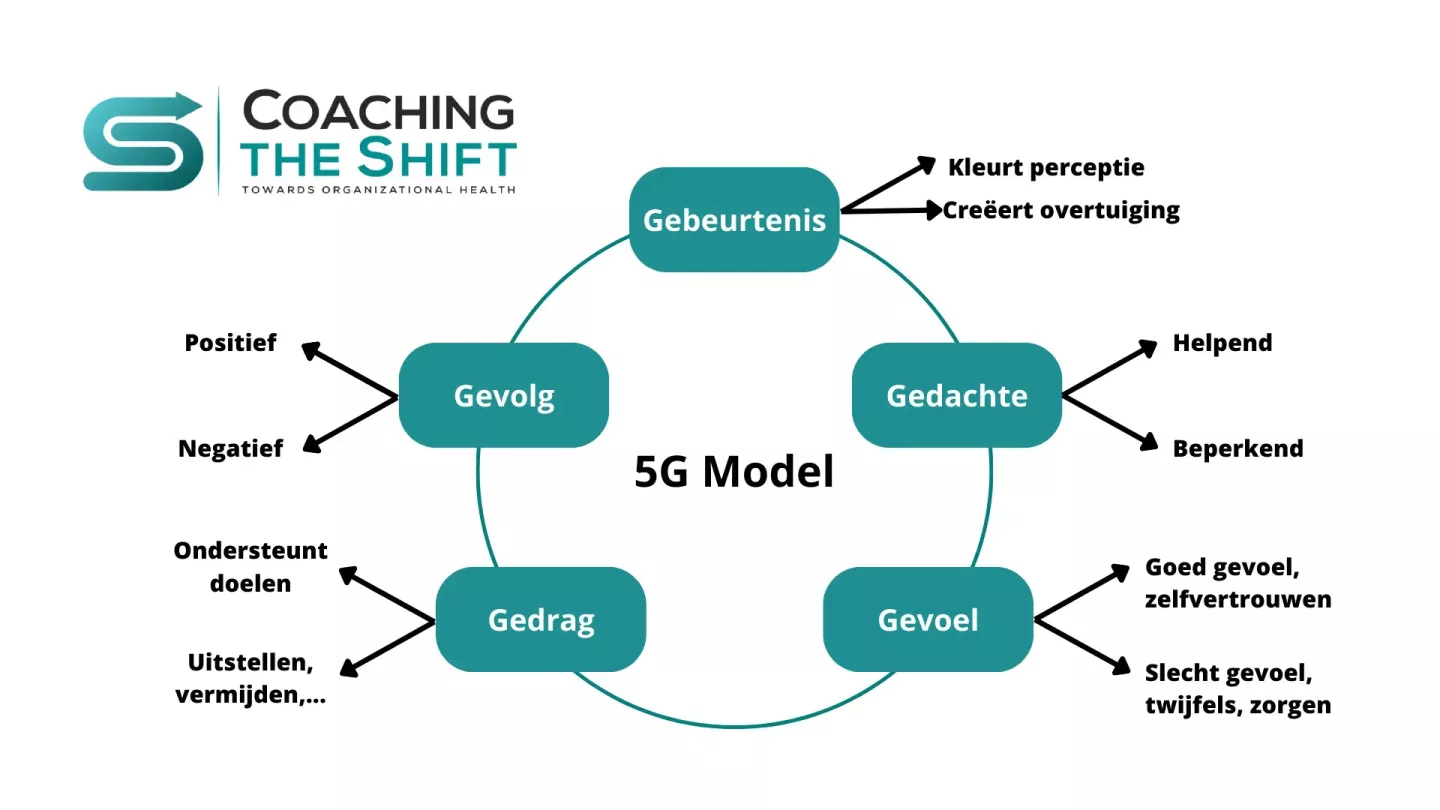
Breaking the negative spiral: completing the 5G model
Your thoughts can create both a negative and a positive spiral. Breaking a negative spiral starts with awareness. From there, you can step outside your thoughts and consciously develop new, empowering beliefs.
By completing the 5G model, you reflect on a situation and consider a better approach for future situations. It increases awareness and therefore enables you to break the negative spiral.
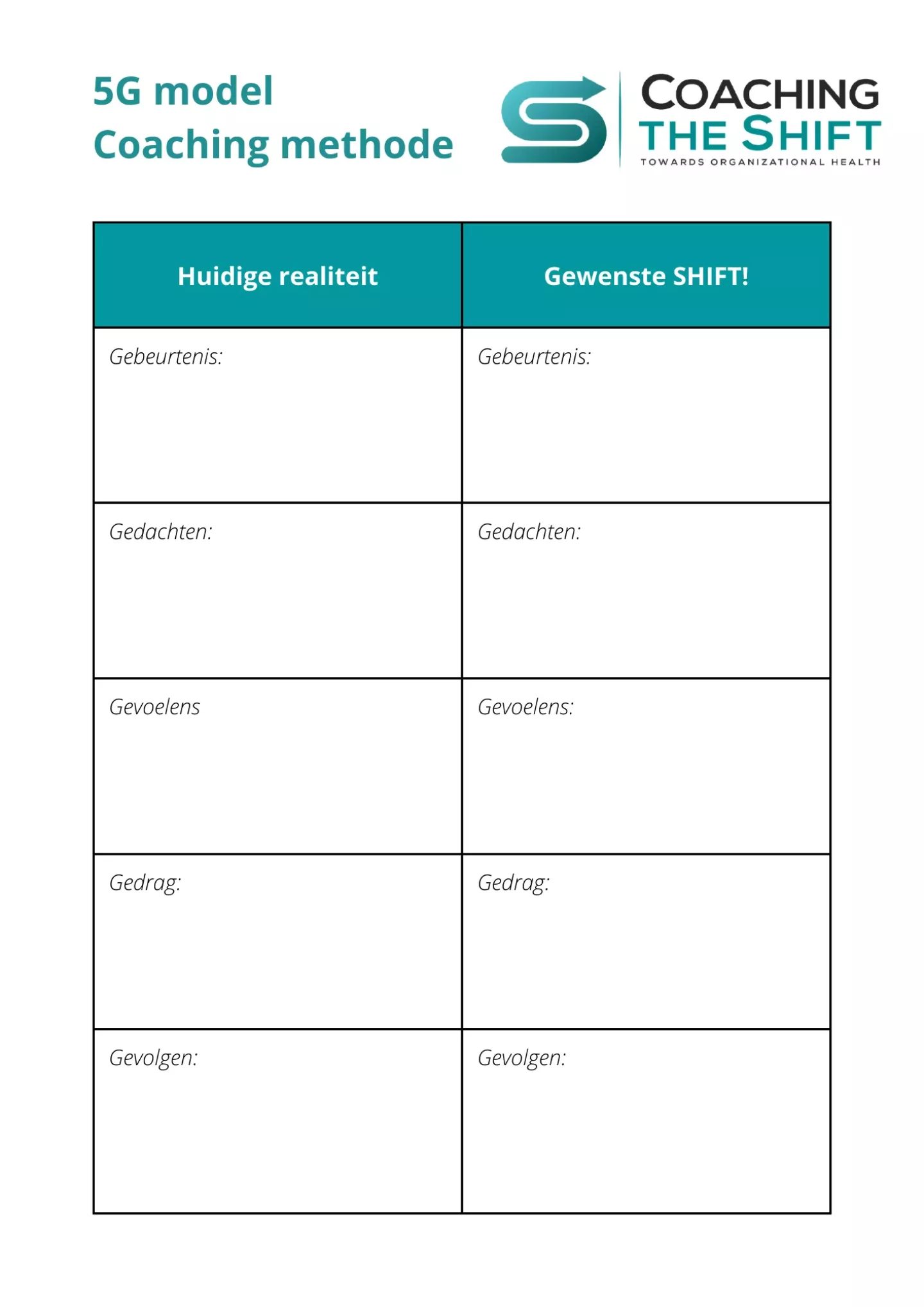
What happens when you start thinking differently? Ask yourself the following questions:
- Is this a helpful thought?
- What thoughts would be helpful?
- How does this lead to different behavior?
- What is the impact on the outcomes?
- How does this influence your emotions?
- How do you want to anchor these thoughts to a specific event?
You do this by imagining the ideal situation and defining who you are in that situation. You could even see this as the sixth G: “Desired shift.” It becomes easier to let go of old habits or thoughts when you replace them with new, more empowering ones.
What shift do you want to create?
Veelgestelde vragen over
het 5G schema
Other relevant articles