What is Transactional Analysis? Communication role patterns
Transactional Analysis is a psychoanalytic method that provides deeper insight into the drivers behind our behavior. The model examines the inner dialogue between ego states or communication role patterns shaped by life experiences and upbringing. In this way, it fosters greater autonomy, awareness, and meaning.

Dorothée Willems

The general idea behind transactional analysis is that throughout our childhood and life experiences, we unconsciously develop norms and values that influence how we think, feel, and act. People have a natural need to be accepted, which can lead us to adapt our behavior — either out of self-protection or the desire to belong to a group.
The transactional analysis model assumes that a person’s behavior or emotional state is the result of an inner dialogue. This dialogue takes place between different, often unconscious beliefs or ego states. Transactional analysis helps us understand where these ideas come from, how they are learned, and how they can work either to our advantage or disadvantage.
- What is transactional analysis? – Explanation
- The transactional model & its components
- PAC model – Ego states
- Transactional analysis – Drivers, stoppers, script
- Strokes and rackets
- Transactional analysis examples – Drama triangle and winner’s triangle
What is transactional analysis? – Explanation
Transactional analysis is a psychoanalytic method used to decode interactions (transactions) in order to gain deeper insight into and understanding of certain behaviors. This can relate to both verbal and non-verbal communication.

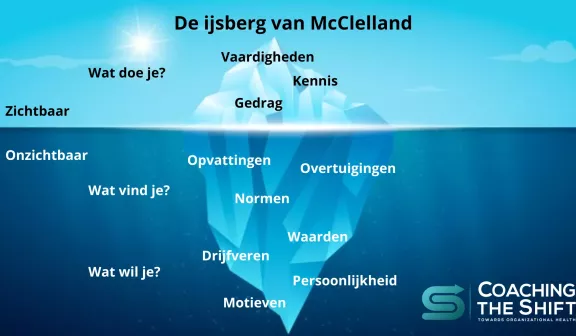
The transactional model therefore examines how we interpret messages based on our “iceberg” — or the way we think, feel, and act. This is often shaped by our upbringing and other life experiences.

Transactional analysis aims to give people greater autonomy and control over how they lead their lives. The process contributes to expanded awareness, leading to greater integrity, meaning, and responsibility.
Discover more practical coaching tools for yourself or your team!
The transactional model & its components
The transactional analysis model is generally based on three core principles:
- Everyone has value — I’m OK, you’re OK!
- People have the ability to think for themselves.
- Behavior is largely determined by (unconscious) decisions. These decisions can be revised to achieve different and better outcomes.
PAC model – Ego states
The PAC model (Parent–Adult–Child) explores the different aspects of our personality. It analyzes how life experiences lead to certain beliefs and how these shape who we are. In transactional analysis, these aspects are called ego states.
These ego states influence how we think, feel, and act:
Parent
Here, we act based on learned norms and values. Our behavior and way of thinking are adopted from parental or authority figures.
Adult
We respond based on what is happening in the here and now. Through rational thinking, we make realistic decisions — although we may sometimes remain stuck in analysis.
Child
We act based on childhood experiences and upbringing. Expectations or unmet needs influence behavior, causing us to fall back into automatic behavioral patterns. These responses are also learned.
Ego states are automatic patterns of feelings, thoughts, and behaviors that develop throughout life. They are parts of ourselves that shift depending on the context we are in.
When we make unconscious decisions, the brain tends to choose the path of least resistance. In other words, we fall back into familiar habits — often referred to as automatic patterns.
You can compare this to driving along the same track on a dirt road: the more often you follow the same path, the deeper the track becomes and the harder it is to leave it. Only by consciously creating and repeatedly following a new path can you develop new and healthier habits.

Transactional analysis – Drivers, stoppers, and script
Drivers
Drivers are norms, values, and behaviors that we perceive as approved or desirable. Their interpretation differs from person to person and is shaped by upbringing and life experiences. Drivers represent a form of conditional behavior.
They often originate from messages received from authority figures, such as: “Try harder.” Approval is received only when certain conditions are met. For example: “I am OK if I do my best.”
Although drivers can have positive effects, they may also become limiting or pressuring. Perfectionism, for instance, often stems from high expectations we impose on ourselves in search of approval from others.
Stoppers
Stoppers are the opposite of drivers — behaviors we perceive as disapproved or unacceptable. These also originate from (often non-verbal) messages.
For example, if someone grows up in a family where emotions are never discussed, they may internalize the belief: “Do not show emotions.”
Script
A script refers to patterns of thinking, feeling, and acting that we learn in order to gain approval. These patterns often develop as a form of self-protection or to fulfill social needs. Depending on the situation, we adopt roles that fit the context.
Although transactional analysis emphasizes early life experiences, these patterns also appear in later relationships. Communication creates expectations to which we unconsciously conform. Authority figures can include not only parents but also managers, organizational leadership, or teachers. These scripts can be both empowering and limiting.
TA Strokes and Rackets
Strokes
Strokes are forms of transactions through which we seek attention and recognition. They can be either positive or negative — and sometimes negative recognition feels better than receiving no recognition at all.
Transactional analysis distinguishes between conditional and unconditional strokes:
- Conditional strokes are based on behavior or performance — something you did leads to positive or negative recognition.
- Unconditional strokes relate to who you are as a person.
In many cultures, we learn to filter strokes, which causes people to unconsciously block or minimize recognition — both when giving and receiving it:
- Do not give strokes: “It was part of their job; no need to mention it.”
- Do not accept strokes: “What I did was normal; anyone would have done the same.”
- Do not ask for strokes: “Don’t fish for compliments.”
- Do not give yourself strokes: “Don’t praise yourself; stay humble.”
- Do not refuse strokes: When a superior says you did something wrong, you automatically assume they are right.

Rackets
Rackets are part of the script in transactional analysis. They are patterns of thinking, feeling, and behaving that do not truly match the situation. As a form of self-protection or justification, you automatically adopt roles such as the “persecutor” or the “victim.”
In doing so, you partly hide your authentic feelings — emotions that may be experienced as “inappropriate” or “not allowed.” However, the underlying problem remains unresolved.
Develop your coaching knowledge and skills! Discover advanced training days in the Shift & Grow community!
Transactional analysis examples – Drama triangle and winner’s triangle
A well-known model within transactional analysis is the drama triangle, in which elements such as drivers, scripts, strokes, and rackets become visible.

The roles within the drama triangle trigger one another. In other words, one person’s behavior evokes a response from another. For example, a persecutor may provoke victim behavior, which in turn calls forth a rescuer. The goal of these transactions is not to solve the problem, but rather to protect oneself or gain a form of recognition.
When an open dialogue is created, however, we move from transaction to transformation. Both parties build on each other’s perspectives through open communication. This requires openness and vulnerability, as well as mutual trust and a willingness to take feedback seriously. In this way, people can work together toward a constructive solution where everyone benefits.