Letting go to grow: winter as a pause button
In this blog post, we invite you to explore together the power of winter energy, the role of the Self-Observer in coaching, the dance between Eros & Thanatos in the contact cycle, and what all of this means for your growth.

Dorothée Willems

There are those periods when everything seems to accelerate all at once. Think of the rush toward the end of the year, both at home and at work. Weeks seem to open and close, and you notice yourself constantly pushing to perform, finish tasks, and keep moving. But moving forward is not always the same as growing. It’s tempting to keep going, ticking off everything on your list, and skipping breaks, while it’s often precisely in those pauses that the key to real change lies.
Winter invites you to pause, to feel what gives you energy and what no longer serves you. It’s a time to slow down, reflect, and listen to your inner guide — your Self-Observer. From this space, you can discover which choices truly suit you, which patterns you can let go of, and where you want to create room for new growth. It is this very stillness that becomes the cradle of creativity, clarity, the right direction, and focus.
Winter: the forgotten phase of growth
Nature truly has no trouble with rest.
Trees draw their energy inward.
Many animals hibernate.
The days are short, the nights dark and long.
The ground becomes still and freezes.
And yet, a great deal is already happening in winter.
There is no “visible” growth — but beneath the surface, an enormous amount is taking place.
Many trees are already forming leaf and flower buds that quietly overwinter.
While everything above ground seems still, the tree redirects its energy to the roots, which continue to grow and store nutrients.
Some animals, such as certain birds or insects, already begin preparing their activities in winter: gathering nesting material, building food reserves.
We humans can certainly draw inspiration from this.
Instead of finishing everything “because it’s the end of the year,” we might ask ourselves:
Do all those deadlines really have to be finished right now?
To what extent does all of this actually serve me?
Am I obliged to organise that celebration at my place perfectly?
Or can I be creative and work potluck-style: everyone brings something tasty to share?
Winter is an invitation to pause, to breathe, to set priorities, to focus, and to reconnect with what truly matters.
👁️ The Self-Observer: your inner guide
The Self-Observer, also known as the internal observer, works much like a coach who guides you from the outside: it gives you the opportunity to become aware of what is happening within you and to gain insight into your own patterns. You learn, for example, to recognise your inner critic and can make much more conscious choices in your behaviour. Through this self-reflection and targeted self-questioning, your self-awareness grows, and you gain more control over your personal development and the achievement of your goals.
A concrete example:
Imagine you are a manager and notice that a team member repeatedly misses deadlines. Your first reaction may be frustration or irritation: you feel the urge to correct immediately or respond sternly.
By activating your internal observer, you take a step back and observe yourself:
What exactly am I feeling? Frustration, concern, disappointment?
What am I thinking about the situation? “They’re not working hard enough” or “I need to intervene”?
Which patterns do I recognise? Perhaps you notice that you tend to judge or correct quickly, without first listening.
From this awareness, you can choose a different response: instead of correcting right away, you opt for a conversation in which you curiously explore the cause of the delay, listen to the context, and look for solutions together with the team member.
Result
You no longer react automatically and emotionally, but rather consciously, proactively, and effectively. Your patterns become visible, your self-awareness increases, and the team member feels heard, which improves collaboration — ultimately benefiting the organisation as a whole.
Winter can also serve as a metaphor to activate the Self-Observer in a natural way.
Returning inward.
Listening.
Feeling.
Expanding perception: “How can I look differently at the same situation?”
Reframing.
Not from pushing, but from awareness.
The Contact Cycle: the movement between Eros and Thanatos
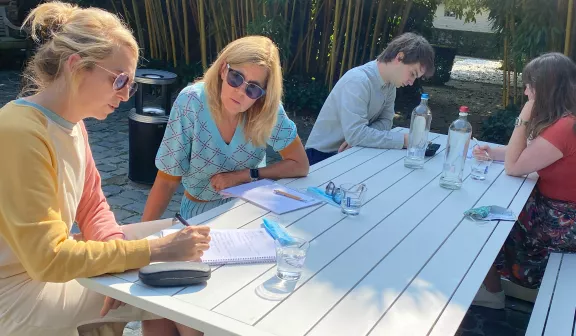
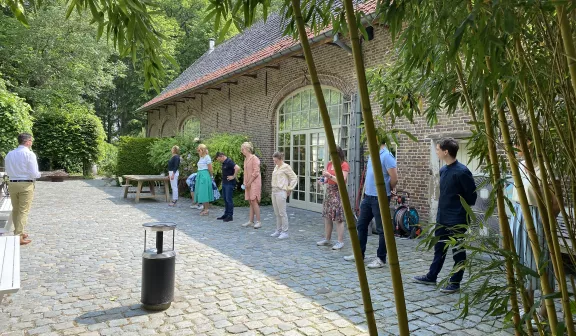
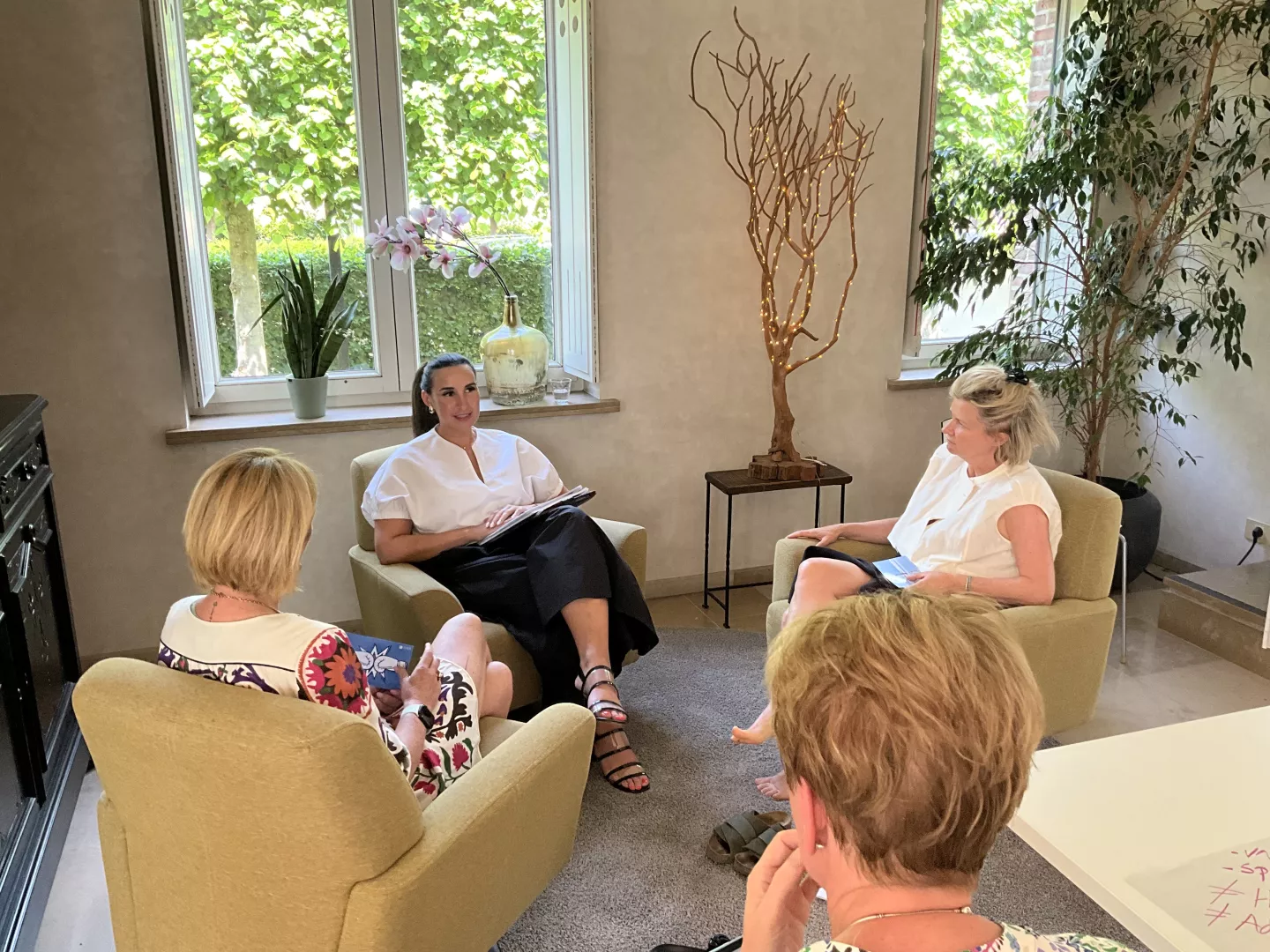
In our Shift & Grow Community for alumni and advanced (team) coaches, we recently discussed the contact cycle — a core model within Gestalt — and how two natural primal forces continuously play a role within it: Eros and Thanatos.

Van overtuigingen naar waarden: value-based keuzes
Richard Barrett maakt een belangrijk onderscheid tussen belief-based en value-based decision making. Richard Barrett is vooral bekend van het Seven Levels of Consciousness-model en zijn werk rond waarden-gedreven leiderschap en organisatiecultuur.
Belief-based keuzes vertrekken vanuit het verleden en worden vaak gestuurd door angst. Het zijn keuzes die we maken op basis van overtuigingen – meestal onbewust – eerder dan op basis van onze waarden, onze werkelijke behoeften of de realiteit van dit moment.
Wat bedoelen we met beliefs?
Dat zijn aangeleerde overtuigingen zoals:
- “Ik moet sterk zijn.”
- “Als ik nee zeg, stel ik teleur.”
- “Hard werken is de enige manier om waardevol te zijn.”
- “Rust moet je verdienen.”
- “Als ik het niet doe, doet niemand het.”
- “Feedback geven schaadt harmonie. Als ik de waarheid zeg, verlies ik de verbinding.”
Deze overtuigingen ontstaan vaak uit opvoeding, school en cultuur, eerdere pijnlijke ervaringen, of loyaliteit aan familie of systemen. Ze voelen waar aan, maar zijn dat niet noodzakelijk. Wanneer we hieruit blijven handelen, bestendigen we het oude en blijven we vaak leven vanuit voorzichtigheid en zelfbescherming.
Value-based keuzes vertrekken vanuit wat je zélf belangrijk vindt. Ze vragen dat je afstemt op je waarden en van daaruit beslist hoe je wil handelen.
Value-based keuzes vertrekken vanuit authenticiteit, verbinding, bijdrage en zingeving. Ze nodigen uit tot andere innerlijke vragen dan keuzes die door angst worden gestuurd: Wat klopt voor mij? Welke keuze weerspiegelt mijn waarden? Wat draagt bij aan het geheel?
Deze keuzes vragen soms moed, omdat ze niet altijd de gemakkelijkste of meest comfortabele weg volgen, maar ze brengen wel innerlijke rust, helderheid en congruentie.
Neem het voorbeeld: “Feedback geven schaadt harmonie. Als ik de waarheid zeg, verlies ik de verbinding.”
Wat als we dit nu eens vanuit een ander, verfrissend perspectief bekijken?
Als harmonie werkelijk een kernwaarde is, en je voelt ruis op een relatie, dan ga je net daarom het gesprek aan. Niet om te breken, maar om te verbinden. Dat vraagt moed. En authenticiteit.
Authenticiteit is geen stijl of persoonlijkheid. Het is leven vanuit je eigen waarden: ze eerst voor jezelf erkennen en waarderen, en ze vervolgens de wereld insturen. Dat is jouw unieke bijdrage. Niet één keer, maar elke dag opnieuw – in hoe je handelt, hoe je beslist, wat je opneemt en wat je loslaat, met wie je samenwerkt en met wie niet.
“Ik ben allergisch aan mensen die heel oordelend zijn.”
Even later benoemde ze haar hoogste waarden: gelijkwaardigheid, rechtvaardigheid en gelijkheid.
Dat spanningsveld is veelzeggend. Want waarden tonen zich niet wanneer alles vanzelf gaat, maar precies daar waar ze onder druk komen te staan. Het is makkelijk om gelijkwaardigheid te omarmen in een context die die al deelt. De echte vraag is wat je doet wanneer je terechtkomt in omgevingen waar oordelen, ongelijkheid of machtsdenken nog aanwezig zijn.
Trek je je dan terug, uit afkeer of zelfbescherming?
Of stap je net binnen, niet om te veroordelen, maar om iets toe te voegen?
Voor een change agent ligt daar het wezenlijke werk: aanwezig blijven in lastige contexten, zonder de eigen waarden te verloochenen, en ze voelbaar maken in houding en handelen — niet belerend, maar verbindend.

Eros – life energy, and Thanatos – the energy of rest and completion
Eros is the energy within us that stands for growth, expansion, inspiration, and desire.
It is the energy of spring: sowing, starting, new projects, fresh ideas.
Thanatos does not stand for death or destruction, but for completion, stillness, and rest.
It is the energy of autumn: letting go of what no longer serves, completing what is ready, making space for something new.
The dance between Eros and Thanatos
Within the contact cycle, it is the balance between Eros and Thanatos that determines whether we remain healthily in motion. The art lies in not clinging rigidly to one particular force.
Too much Eros → overdrive, forcing, exhaustion
Too much Thanatos → stagnation, paralysis, withdrawal
Overwintering, as nature does, is a perfect example of Thanatos in action. Just as trees draw their energy inward, allow buds to mature, and strengthen their roots, it is essential for us to take periods of slowing down and reflection and to embrace the wisdom of Thanatos. It is a phase of letting go, recovery, and preparation. Only then can Eros flow healthily again in spring.
In Scandinavia, people celebrate the Yule-Fest, a celebration around the midwinter period. It begins on 21 December, the shortest day of the year, when some places in Scandinavia see hardly any daylight. This period symbolises a low point: everything can feel dark, things are not yet visible — both literally and figuratively — and it is precisely this that is celebrated.
Yule traditionally lasts 12 days, until 31 December. It is a time of connection and closeness, when people gather with those they feel most connected to. It is about being together, sharing, creating beautiful moments, and giving and receiving. At the same time, this period marks the darkest point of the year, but also the moment when the light slowly returns — a symbol of hope, renewal, and new growth.
In many transitions in our work and lives, there is a point at which we cannot yet clearly see the solution. This may be a company going through restructuring, or a dark phase in a divorce. It is not yet clear what the next steps should be. But in every process, in every change — big or small — there is perspective: light always returns.
Just as buds are already preparing to bloom during winter, ideas, intentions, and new habits often lie hidden within you during your reflection period. Pausing, slowing down, and letting go in winter is not stagnation — it is preparation for your personal spring. Energy always has a tipping point, from which an upward movement can begin again.
By consciously embracing winter and pausing to reflect on what no longer serves you, you close the contact process within yourself in a healthy way and create space for new movements driven by Eros. In other words: overwintering strengthens your ability to move later in the contact process with energy, clarity, and awareness.
💡 In short: rest and reflection are not stagnation; they are a crucial phase in the cycle of contact and personal growth.
👉 This conversation generated so many insights within our Shift & Grow Community that we decided to explore the theme more deeply in the coming months.
The seasons within the contact cycle
Within the contact cycle as well, we can use nature as a metaphor for personal growth.
- Spring brings new shoots: everything grows, becomes visible, and can be nurtured. You can begin to focus on what you want to grow and where you place your priorities. Which ideas, plans, and intentions do you want to invest your time and energy in?
- Summer is abundant and expressive. Much is already visible, and there is a great deal of energy to act and move outward. Where are you being rewarded for your efforts? What has come into bloom?
- Autumn is when trees begin to lose their leaves. It is about letting go and saying goodbye to situations and processes that no longer serve us. Which projects, patterns, or habits are you ready to leave behind?
- Winter, finally, brings colder days and shorter daylight hours. We turn inward and create some distance. What do you want to take with you into the next year? What is asking for stillness? Which direction do you want to move in next year?
This natural rhythm helps you stay in contact with yourself — rather than being driven by deadlines, expectations, or the pressure of “having to.”
How will you invest in your personal growth?
If you feel ready to grow more deeply — both personally and professionally — this may be the moment to take an important step.
Discover our training programme to become a Professionally Certified Coach, and sign up for a free introductory workshop.
A journey that teaches you to coach from depth, awareness, and personal transformation.
A programme that is as much about your own growth as it is about your craftsmanship as a coach.
Would you like to engage more often in conversations about themes like these?
Would you like to meet other growth-minded people?
Would you like to nourish, reflect on, and strengthen your Self-Observer?
👉 Become a member of our Shift & Grow Community
Growing together.
Learning together.
Becoming aware together.

Veelgestelde vragen over
waarden en waardengedreven keuzes
Inschrijven voor onze nieuwsbrief?
Other relevant articles