The 5 biggest challenges for leaders in 2025
(and how team coaching addresses them)
Are you, as a modern leader, facing unprecedented challenges? You are not alone. In a world that is evolving faster than ever, traditional management techniques are no longer sufficient. Employees need a leader who embraces a coaching role. Team coaching helps address challenges such as a lack of engagement and trust.

Magaly De Smet

In a complex world that seems to evolve faster and faster, leaders are facing many new and unique challenges. Employees no longer settle for traditional, hierarchical leadership styles. This new work environment requires leaders to take on a more coaching-oriented role. Team coaching introduces a new mindset and approach that unlocks the hidden potential within teams.
Discover in this article the 5 biggest challenges leaders face — and how team coaching helps address them:
- Communication pitfalls in teams
- Creating engagement (in a hybrid work environment)
- Hidden team dynamics and “quiet quitting”
- Lack of psychological safety
- Untapped team potential and creativity

1) Communication pitfalls in teams
In today’s complex work environment, team communication is more important than ever. Yet many leaders struggle to recognize and address misunderstandings and conflicts within their teams in time.
Recognizing misunderstandings and conflicts
Miscommunication can remain unnoticed for a long time and eventually escalate into full-scale conflict. It is essential for leaders to recognize early warning signs:
- Decreased productivity: When team members spend more time clarifying instructions or correcting mistakes, this may indicate communication problems.
- Increased tension during meetings: Pay attention to non-verbal signals such as crossed arms, avoiding eye contact, or frustrated facial expressions.
- Lack of collaboration: When team members prefer working individually rather than together, this may point to underlying communication issues.
Example: In an IT company, managers notice that developers and marketers increasingly work past each other. Projects are delayed because both departments interpret project goals and deadlines differently.
How team coaching promotes open communication
Team coaching offers effective tools and techniques to overcome communication pitfalls:
- Active listening: Coaches teach leaders how to truly listen to their teams. This goes beyond hearing words — it includes understanding underlying emotions and needs. For example, by organizing regular “reflection circles” where team members can share without interruption.
- Feedback culture: Regular feedback sessions help identify and address problems early. A team coach can support the implementation of a 360-degree feedback system, where feedback comes not only from leadership but also from peers and stakeholders.
- Conflict resolution: Team coaches provide strategies for resolving conflicts constructively. They may facilitate role-playing exercises in which team members learn to navigate difficult conversations without damaging working relationships.
In the IT company example, a team coach could introduce peer learning sessions to encourage knowledge sharing in both directions, helping developers and marketers understand each other’s perspectives and align around shared goals.
2) Creating engagement (in a hybrid work environment)
Today’s world evolves rapidly, and the workplace evolves along with it. A clear example is the hybrid work environment — a new type of team dynamic that has accelerated significantly in recent years.
New dynamics and expectations
These new dynamics also create unique leadership challenges:
- Balancing flexibility and structure: Employees expect more flexibility while still needing clear structures and expectations.
- Maintaining team culture remotely: Building and maintaining strong relationships becomes more challenging when face-to-face interaction is limited.
- Fair treatment of remote and on-site employees: There is a risk of creating a “two-tier” workforce where on-site employees receive more visibility and opportunities.
Example: An international consultancy firm noticed that remote employees increasingly felt isolated and less involved in important decisions.
Team coaching for better remote collaboration
Team coaching helps improve communication and engagement within hybrid teams:
- Virtual team-building exercises: A team coach can design and facilitate online activities that strengthen connection and trust.
- Development of remote leadership skills: Coaches train leaders in facilitating virtual meetings effectively, giving feedback remotely, and recognizing signs of burnout or declining motivation among remote employees.
In the consultancy example, a team coach could organize online peer reflection sessions that stimulate engagement and open dialogue while improving communication dynamics and knowledge sharing.
3) Hidden team dynamics and “quiet quitting”
Hidden team dynamics and unspoken frustrations can lead to reduced engagement and even “quiet quitting.” As a leader, it is important not only to recognize the signals but also to address the underlying issues.
Recognizing and addressing the signals
Quiet quitting is often just a symptom. The deeper issue is that employees may feel unheard or unrecognized. They may receive insufficient feedback or lack opportunities to contribute their own ideas.
You may recognize it through:
- Reduced engagement during meetings: Previously active employees become quiet or appear disengaged.
- Reactive behavior: A noticeable decline in initiative or new ideas; employees simply comply with decisions rather than contribute.
- Minimal communication with colleagues: Employees withdraw socially and limit communication to what is strictly necessary.
Feelings of neglect within teams are one of the biggest leadership challenges today.
Creating a culture of openness through team coaching
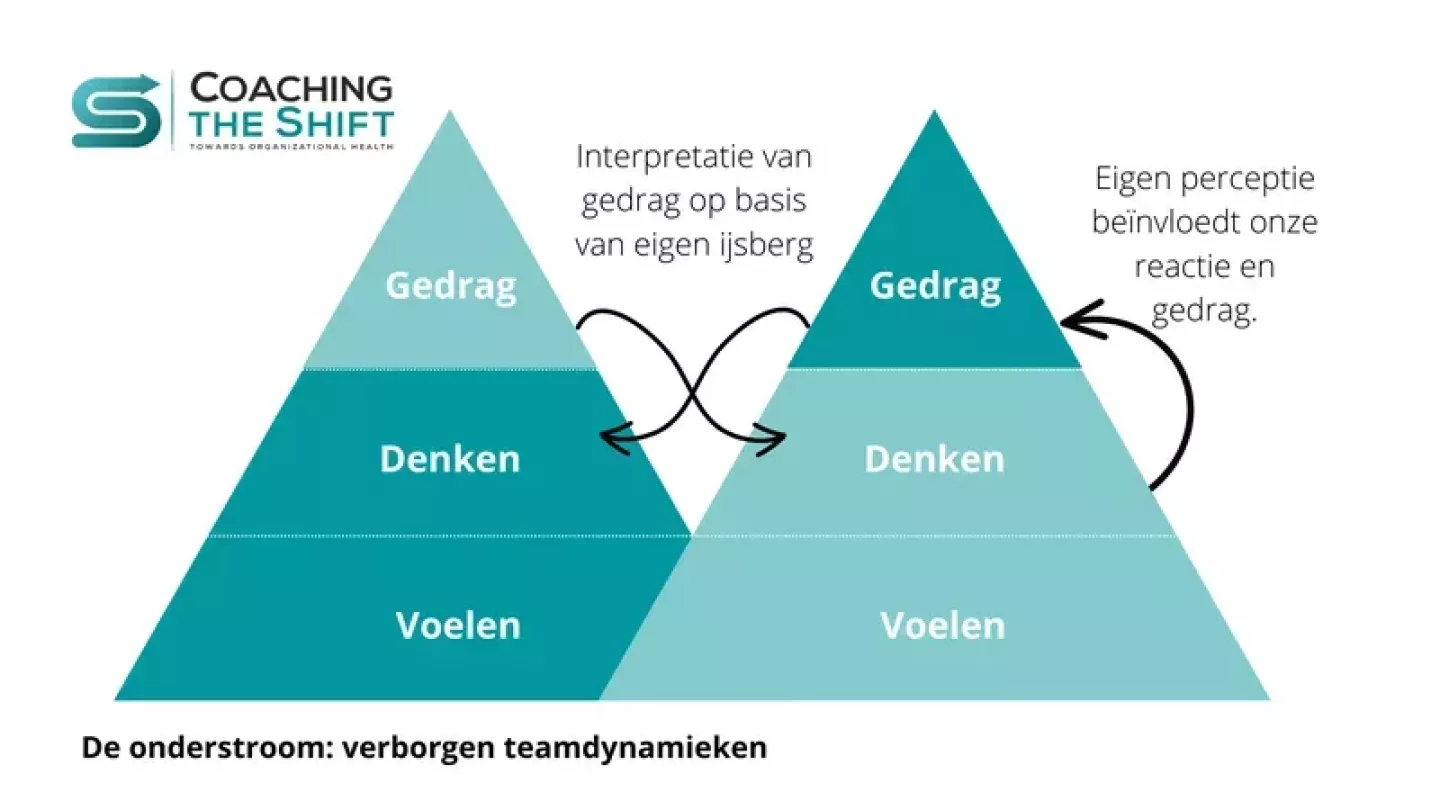
Team coaching helps bring hidden communication patterns to the surface. By asking the right questions and creating a psychologically safe, non-judgmental environment, openness within teams increases.
- Creating a safe environment built on trust: Team coaches facilitate workshops where team members learn to give and receive feedback constructively.
- Developing empathetic leadership skills: Coaches train leaders in emotional intelligence and active listening, enabling them to reach the core of problems more quickly and effectively.
4) Lack of psychological safety
Psychological safety — the feeling that people can take risks and show vulnerability without negative consequences — is essential for effective team performance. Building trust as a leader plays a key role in this. Leaders must create an environment where team members genuinely feel heard and valued.
The importance of psychological safety for team performance
The importance of trust and psychological safety in teams may seem obvious, yet it is often underestimated:
- Increased innovation and creativity: In a psychologically safe environment, team members are more willing to share out-of-the-box ideas.
- Improved problem-solving: Teams that feel safe are more likely to admit mistakes and learn from one another.
- Stronger team culture: When people feel safe, greater trust and openness naturally emerge within the team.
Example: The atmosphere within a medical development team deteriorates after a series of failed experiments followed by tense exchanges with management. Since then, the team has become increasingly conservative and slower in its decision-making.
How team coaching contributes to a safe work environment
Team coaching supports leaders by:
- Creating a “fail-safe” environment: Coaches help implement a lessons learned culture in which failures are viewed as learning opportunities.
- Encouraging diverse perspectives: Team coaches train leaders to actively seek and value different viewpoints within the team.
- Developing inclusive leadership: Coaches help leaders recognize their own biases and adopt leadership styles that engage and value all team members.
A team coach can help rebuild trust within the medical development team — strengthening both individual confidence and collective trust, as well as restoring trust between management and the development team.
5) Untapped potential and creativity
In many teams, a wealth of collective wisdom and capability remains unused. One of the biggest challenges for leaders is discovering and unlocking this hidden potential.
Recognizing and unlocking hidden team potential
- Regular team conversations: Looking beyond individual tasks and encouraging discussions about shared goals and ambitions.
- Creating space for collective reflection: Facilitating moments where teams reflect on collaboration and growth.
- Stimulating collaboration: Bringing together diverse perspectives can lead to unexpected breakthroughs — within teams, 1 + 1 = 3.
Example: The customer service department of a financial institution has deep insights into customer questions and needs, yet their input is rarely requested when launching new products.
Team coaching as a catalyst for innovation
Team coaching helps unlock hidden team potential by strengthening communication and collaboration:
- Facilitating creative brainstorming sessions: Coaches introduce techniques that stimulate creative thinking and help teams step outside their comfort zones.
- Strengthening flexibility and resilience: Team coaches support organizations in navigating continuous change while keeping people at the center.
- Creating a culture of continuous learning and improvement: Coaches help build learning organizations where knowledge is actively shared and developed.
In the financial institution example, a team coach could facilitate cross-functional sessions where teams such as customer service, sales, and marketing jointly contribute insights about customer needs.
In short, modern leaders must evolve alongside the changing work environment to address today’s challenges. By adopting a more coaching-oriented leadership role, you can unlock and fully leverage your team’s potential.
Would you like to learn more about how to implement team coaching within your organization?
Discover our Kickstart Team Coaching program and take your leadership skills to the next level!
Other relevant articles