How do you deal with cultural differences in teams:
Practical tips for success.
How does your team deal with cultural differences? In an increasingly international world, teams are becoming more diverse as well. This brings many opportunities, but also challenges. In this blog, you’ll discover practical tips to leverage diversity and build a dynamic, effective team — regardless of differences. Learn how openness, respect, and shared understanding are the keys to global innovation and collaboration!

Naziha El Handousi

How does your team deal with cultural differences? In an increasingly international world, many teams collaborate with people from different countries and cultures. This diversity can be both a strength and a challenge. On one hand, an international environment can lead to new, innovative ideas and solutions. On the other hand, it can result in communication challenges due to differing cultural norms and values.
How should you deal with this as a leader or HR professional? Discover in this blog:
- Why cultural differences matter
- Examples of cultural differences between the Netherlands and Belgium
- How to deal with cultural differences in teams
- The power of openness and respect
Why cultural differences matter
Working in a team means not only collaborating toward shared goals, but also dealing with different ways of working, communication styles, and values. Cultures deeply influence these elements. When you understand these differences, you can not only bridge them but also use them to make your team more effective.
Cultural diversity brings new ideas and perspectives, but without the right understanding, misunderstandings and conflicts can arise. This, in turn, can undermine collaboration. However, when a team learns to understand the deeper cultural layers, it builds a strong and dynamic team that can excel in a global market.
Examples of cultural differences between the Netherlands and Belgium
A concrete example of cultural differences can already be found in Dutch and Belgian working styles. Dutch people are often known for their direct communication, while Belgians tend to adopt a more indirect approach. In meetings, this can lead to misunderstandings, where Dutch colleagues may come across as too blunt or impatient, while Belgians may perceive this as impolite.
Another example is how both countries approach hierarchy. In the Netherlands, there is often less need for strict hierarchy, and people generally feel free to express their opinions regardless of their position. In Belgium, there is typically more emphasis on hierarchy, and showing respect toward authority is more strongly valued.
Of course, these are generalizations. You cannot assume that everyone shares the same values, norms, or working styles. Each team member brings unique experiences and cultural backgrounds that influence how they collaborate and solve problems. It is important to recognize and appreciate this diversity so that everyone feels respected and understood.
How do you deal with cultural differences in teams?
Ignoring cultural differences is not helpful. On the contrary, it is far better to make them discussable. By openly addressing cultural differences, you promote open communication and understanding within the team. There is great value in acknowledging and exploring diverse perspectives.
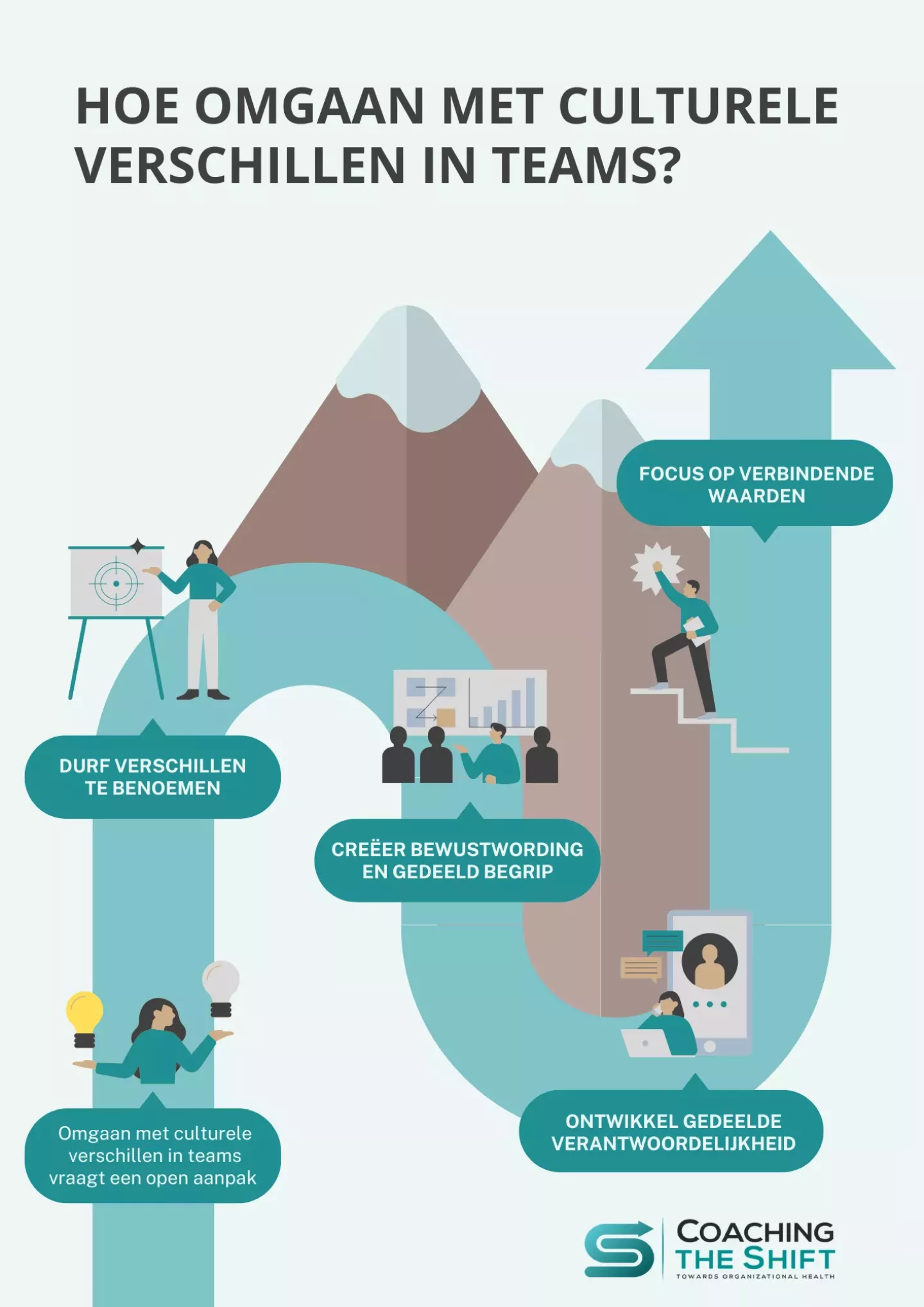
1) Naming the differences
The first step is always to acknowledge cultural differences — naturally in a respectful way. When you make the topic discussable, you give people the space to share their feelings and preferences. This not only creates awareness but also ensures that everyone feels heard and understood. Instead of silently holding expectations, you encourage the team to communicate openly about what matters to them.
2) Awareness and shared understanding
Developing shared understanding starts with mutual awareness. Teams need to realize that not everyone shares the same backgrounds and beliefs. This applies to everything: from work ethic and communication to feedback and conflict resolution. For example, a team member from South Korea may see “compromise” as a form of collaboration, while someone from the Netherlands may approach conflict more directly. It is important that both cultures understand that their way of working is not the only correct one.
3) Shared responsibility
Once these differences have been identified, it is crucial for the team to take responsibility for their interactions. This means everyone must actively engage in understanding and respecting each other’s values. Culture is not only something you understand in theory, but something you must apply in practice.
4) Focus on what connects you
Avoid the trap of focusing on differences. Instead, look for common ground. As we often say: beliefs divide, values connect. Focus not on what people believe individually, but on the higher shared values that unite you. By consciously paying attention to cultural diversity within teams, you can break down barriers that might otherwise hinder growth or disrupt collaboration.
The power of openness and respect
Openness and respect form the core of a well-functioning multicultural team. When people feel free to share their culture while respecting others, an environment of mutual understanding emerges. This not only creates a more positive work atmosphere but also strengthens relationships within the team.
A great example is an international work environment where teams have integrated different cultures into their approach. Through open dialogue and respect for diverse values, teams can embrace new ideas that might otherwise never surface. The goal is not to give up your own culture, but to approach others with curiosity and respect.
In short, dealing with cultural differences is essential for a team’s success. Cultural differences do not have to be obstacles — in fact, they can become the driving force behind innovation, creativity, and effectiveness in teams.
- Identify the cultural differences within your team.
- Open the dialogue and give people space to share their cultural values.
- Build shared understanding and respect for different working styles.
- Set shared goals that strengthen the diversity of your team.
By making differences discussable, you also make them workable. This creates shared awareness and responsibility that ultimately strengthens collaboration. Would you like this for your team as well? Discover how to guide teams toward open dialogue and collaboration!
Discover how we can help you build your high-performing team!
Inschrijven voor onze nieuwsbrief?