3 limiting beliefs & how to change them
You are what you believe. When someone does not fully commit to their goal, it is likely due to limiting beliefs on one of three levels. The PAW coaching method helps identify and change these beliefs.

Silvia Zeppieri

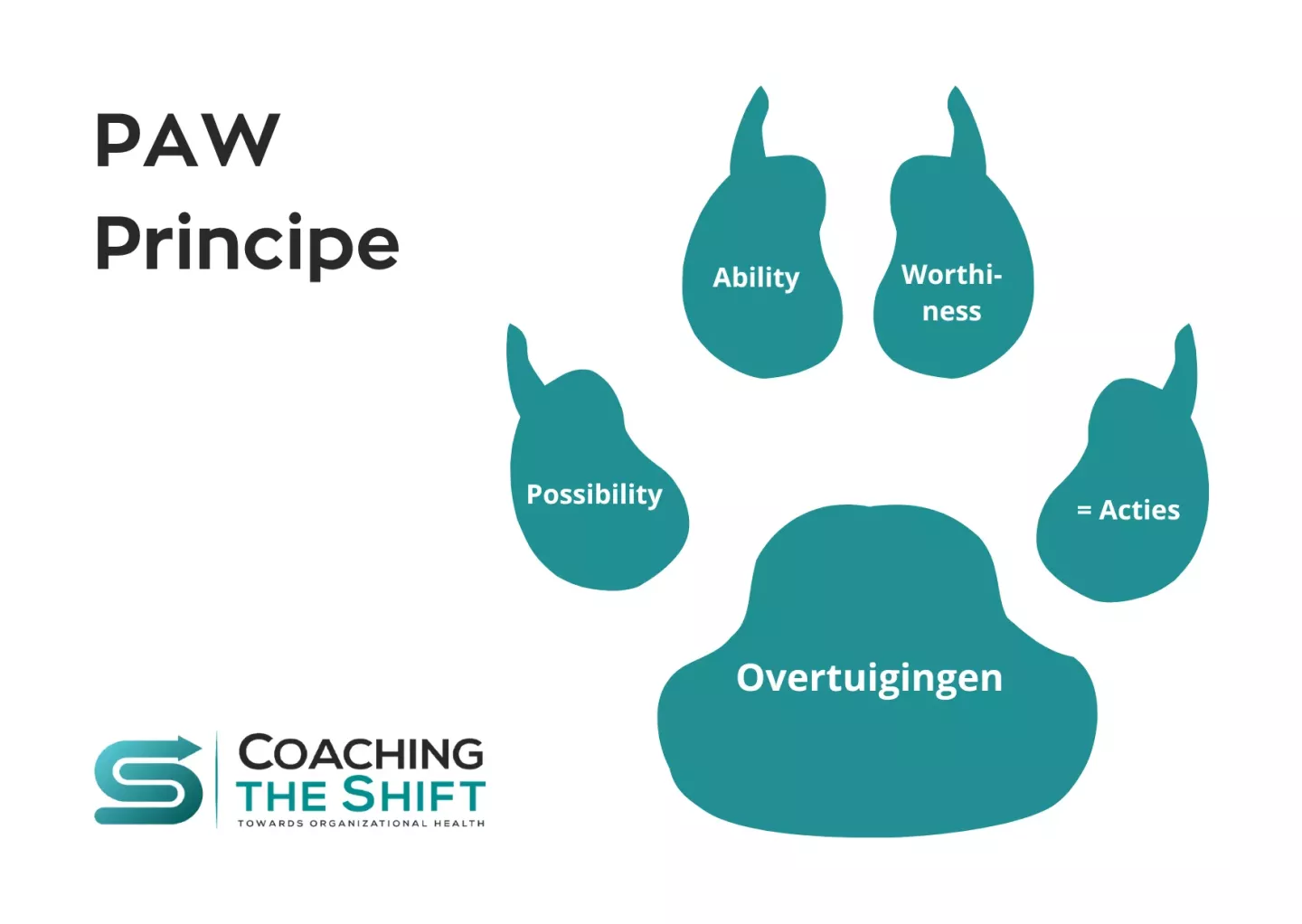
You are what you believe. Unfortunately, we often limit our own potential through unconscious limiting beliefs. The PAW coaching method helps identify and transform these limiting beliefs. When someone does not fully commit to their goal, it is often due to limiting beliefs on one of three levels: Possibility, Ability & Worthiness.
“We are human beings, not human doings.” – Dorothée Willems, Master Coach
Discover in this article how to transform limiting beliefs into empowering ones:
- The PAW coaching method
- Possibility – Is it possible?
- Ability – Can I do it?
- Worthiness – Do I deserve it?
- Changing limiting beliefs: 3 coaching techniques
The PAW Coaching Method
The PAW coaching method is a technique used to identify limiting beliefs and then transform them. It is a valuable tool for both coaches and leaders.
When someone does not fully pursue their goals, it is often due to a (sometimes unconscious) belief that limits their ability to reach their full potential. There is a strong chance that this limiting belief exists on one of the following levels:
- Possibility – You do not believe success is possible.
- Ability – You do not believe that you personally are capable of achieving success.
- Worthiness – You do not believe that you deserve success.
Below, we explain the coaching method through a video.
Limiting belief 1: possibility
At this level, you do not believe success is possible. This can happen when goals feel unrealistic or intangible. In other words, you do not know WHAT to do.
What can help here is adopting a stronger Pippi Longstocking mindset — meaning the courage and boldness to be guided by curiosity.
“I have never tried it before, so I think I can do it.” – Pippi Longstocking

In addition, role models are highly valuable. For example, the dog sees the cat demonstrating what is possible. As a result, the dog’s perception of possibility — and the underlying beliefs — begin to change.
Limiting belief 2: ability
At this level, you do not doubt that a task is possible, but you doubt your personal ability to accomplish it. In other words, you do not know HOW to do something. Can the dog really do what the cat does? After all, he is much bigger and broader.
What helps is reflecting on past success experiences. You can then contextualize how you want to achieve your goal. Creating a clear image of success and how to reach it often makes the goal feel less abstract. The first steps are always the hardest. Once you start moving, you can build momentum and adjust along the way.
It also requires a shift from a fixed mindset to a growth mindset. For example: “I can’t do it — yet.” From this new mindset, limiting beliefs can be transformed into empowering ones.
It is important to dare to make mistakes. The dog likely practiced many times before reaching this point. Perhaps he started with smaller obstacles and gradually progressed. Even when things went wrong, the dog kept trying. As the saying goes: persistence pays off.
Limiting belief 3: worthiness
The final level of limiting beliefs relates to self-worth. You do not believe you deserve success. Thoughts may arise such as: “Am I the right person? Aren’t there better people? Do I really deserve this opportunity?” These are often signals of unconscious limiting beliefs. When we encounter difficulties, we automatically begin to doubt ourselves.
The first step is to shift or rationalize your perception. No one has all the answers, and no one can be good at everything. It is completely normal to feel uncertain at times. Constellation work can also be helpful, as it explores underlying experiences that may lead to self-sabotaging thought patterns.
Discover more models like the PAW coaching method on our free tools page!
Changing limiting beliefs: 3 coaching techniques
There are various coaching techniques that help transform limiting beliefs. The PAW coaching method helps identify where the blockage is located, after which the belief can be reframed.

You are what you believe. However, limiting beliefs can hold you back from developing your full potential. This can lead to lower self-confidence and a less positive attitude.
1. Change your behavior
“When in doubt, take action.”
As mentioned earlier, the first steps are often the hardest — but also the most important. Once you get moving, it becomes easier to build momentum. By taking action, you often discover that something is possible. Adding a strong intention makes this even more powerful.
2. Change your belief
Become aware of your own thinking patterns and where you may be sabotaging yourself. Explore the origins of this reasoning. Which experiences led to these beliefs? Which values were you raised with as a child?
Then dare to question your beliefs. Are they grounded in reality, or are they your own interpretation? Do these beliefs serve your goals — or hold you back?
3. Change your perception
Lead each day with a positive intention. This helps you transform or reframe limiting beliefs. For example, you can interpret mistakes as irreversible failures and feel discouraged — or you can choose another perspective. Mistakes can also be opportunities to learn, grow, and develop.