7+1 Intervision Methods to Gain Deeper Insights with Your Team!
How do you get more out of your team? The power of teams lies hidden in collective awareness—the ability to learn, share, and grow together. Intervision deliberately creates the time and space to accelerate team learning. Discover in this blog 8 practical intervision methods you can start using today!

Leen Lambrechts

What is intervision?
The goal of intervision is to accelerate the collective development of a group or team. This is done by exchanging knowledge, insights, and experiences. How can you speed up your team’s development with intervision? Discover more than 7 intervision methods to gain deeper insights!
What is intervision?
7 fun and short intervision methods:
- The SHIFT! method
- The incident method
- The 5-step method
- The gossip method (or thinking out loud)
- The dominant ideas method
- The 5W1H method
- Advice-only method
- BONUS: The Balint method
Discover a wide range of intervision methods in our Masterclass Team Coaching and learn how to guide teams from A to Z!
What is intervision?
The definition of intervision is: a collective learning moment. It is a form of peer-to-peer coaching in which like-minded professionals exchange insights around concrete cases and real-life challenges. This process is facilitated by a coach. Not to be confused with supervision.
The purpose of intervision is to step into someone else’s shoes, allowing you to look at your own case—and those of other participants—from different perspectives. One or more intervision methods are often used to discuss a case.
The power of intervision lies in the group’s shared awareness. You come together with 4 to 8 professionals in a similar work context. By sharing insights, challenges, and experiences, the group builds on one another’s knowledge.
A professional coach helps harvest insights throughout the intervision. In addition to preparing and facilitating different intervision methods, the coach must be able to respond to what is happening within the group. The coach then supports participants in defining actions and agreements for the future.
7 fun and short intervision methods
There are various ways to facilitate intervision. Depending on the available time, number of participants, location, and objectives, you can use one or multiple methods. Each method is divided into rounds, which can last 5, 10, 15, or 20 minutes.
We recommend a duration of 3 hours (online) to 4 hours (in person) to discuss 3 to 5 cases. In addition to case presenters, it is best to have 2 to 3 observers present. They share their perspectives on the cases discussed.
Feeling inspired to get started? Discover more than 7 intervision methods:
1) The SHIFT! method
The SHIFT! method uses our own coaching model to structure conversations and processes. We explore the desired shift of the case presenter from both a problem-oriented and solution-oriented perspective.
Intro – The participant presents their case and reframes it into a “How can I…?” question.
Set goals & Honour reality – The group first asks clarifying questions about the context. What is the desired shift? What does the current reality look like?
Identify obstacles – The group then explores the problem and possible obstacles more deeply. What is still missing to realize the desired shift? What is getting in the way?
Find resources – Next, the group investigates: Who or what can help? Everyone contributes ideas and solutions based on their own experience.
Take action! – Finally, insights are translated into concrete actions. How will the case presenter move forward? What does the group take away from this?
Evaluation – The group reflects on the insights and evaluates the intervision method.
Ultimately, the insights are translated into concrete actions. How will the coachee follow up on their own learning process?
2) The incident method
The incident method is a practical way to organize a (first) intervision. Participants often prepare a case based on a recent or unresolved incident—an ideal entry point for the coach.
Incident – The presenter initiates intervision based on a concrete incident or a series of unresolved incidents.
Clarification round – The case presenter provides more insight into the context of the case.
Information round – Participants ask clarifying questions. These are factual information questions only.
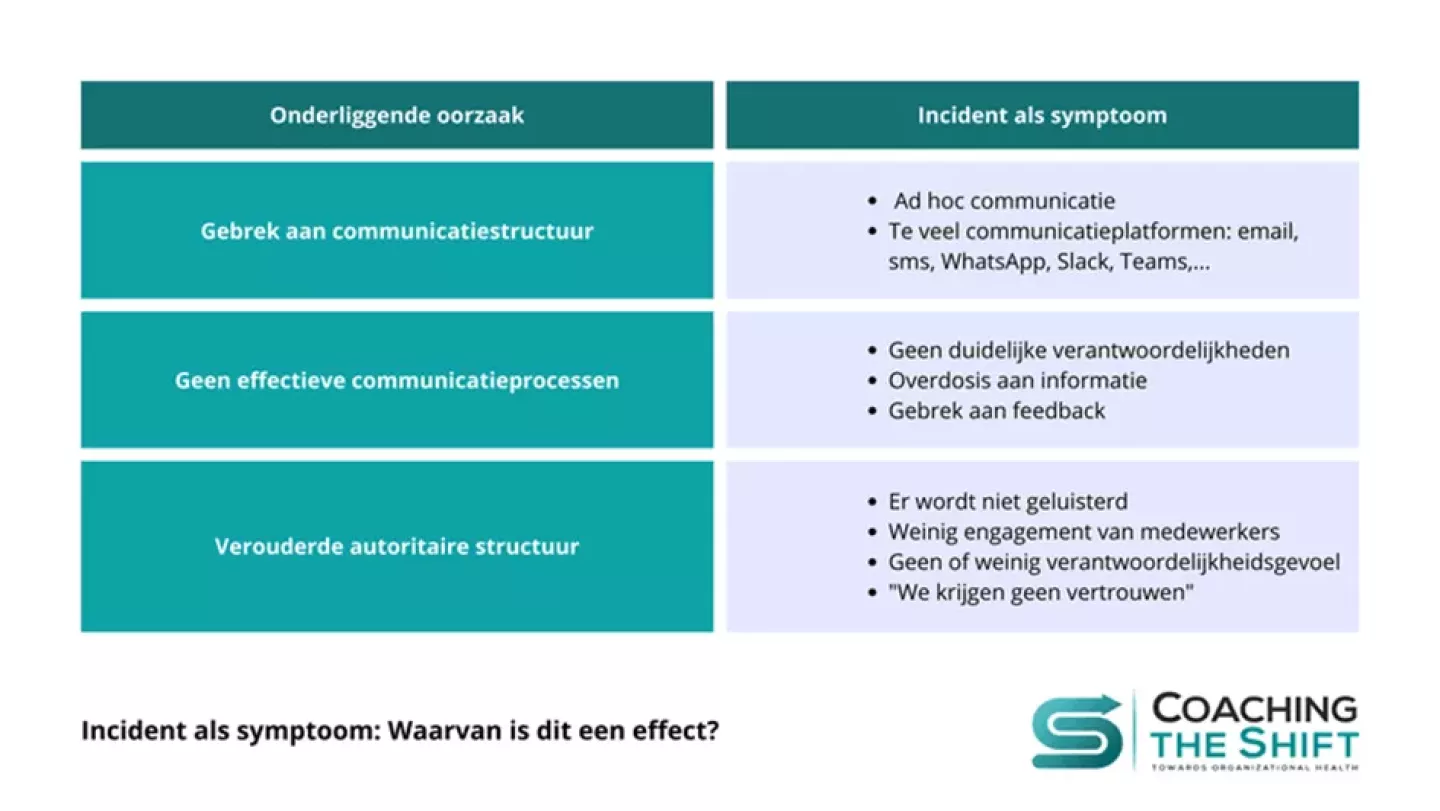
Diagnosis – The group asks deeper questions. What might this incident be a symptom of? What lies beneath?
Solution round(s) – The group offers advice and suggestions from an “I” perspective. This can be split into two rounds. In the first round, the group gives advice while the presenter listens. In the second round, the presenter can ask clarifying questions and request further input.
Choice & actions by the presenter – The presenter selects the most relevant suggestions and formulates how they will commit to action moving forward.
Evaluation – The group reflects on the insights and evaluates the intervision method.
The incident thus becomes an opportunity for the group to learn, share, and explore shared experiences. Not only the presenter, but all participants learn from the different perspectives and take these insights back into their own work context.
3) The 5-step method
The 5-step method is one of the most well-known, widely used, and accessible intervision methods. By asking questions, the case presenter gains a clearer view of the problem and its underlying causes.
- Intro – The participant presents their case and reframes it into a “How can I…?” question.
- Problem exploration – The group first asks open questions to explore the problem. The coach collects all questions on a flipchart or online whiteboard.
- Problem definition – Each participant formulates what they see as the main (underlying) problem. This is done respectfully, from an I-perspective.
- Advice round – Each participant gives at least one piece of advice to address the problem.
- Evaluation – The group reflects on the insights and evaluates the intervision method.
4) The gossip method (or thinking-out-loud process)
The gossip method is a playful way to gather insights without giving direct advice. Make sure to set a clear framework and ground rules, as psychological safety within the group is essential.
- Intro – The participant presents their case and reframes it into a “How can I…?” question.
- Problem exploration – The group asks questions to explore the problem.
- Gossip method – The group talks about the problem and the presenter’s situation as if the presenter is not present. If the intervision takes place online, the case presenter can turn off their camera. What possible causes does the group see from their perspective? What would they do differently themselves?
- Presenter’s response – The presenter returns and responds. What stood out to them? What insights stayed with them?
- Evaluation – The group reflects on the insights and evaluates the intervision method.
The gossip method brings multiple perspectives to the surface. It helps challenge and question ideas or viewpoints.
5) The dominant ideas method
This intervision method helps map limiting beliefs. It is ideal for presenters who want to explore and question their doubts. By reflecting dominant ideas back to the presenter, you increase their level of reflection and awareness.
- Intro – The participant presents their case and reframes it into a “How can I…?” question.
- Active listening & questioning – The group asks clarifying questions about the presenter’s challenges and listens actively for possible underlying beliefs. What does the presenter believe that may unconsciously and unintentionally sustain their current reality?
- Inventory – Participants reflect statements from the presenter that may point to limiting beliefs. The coach then collects these on a flipchart.
- Presenter’s response – The presenter shares their thoughts and feelings when seeing these dominant ideas. Which beliefs do they want to work on?
- Reframing beliefs – Using the four questions of Byron Katie, the presenter is supported in questioning and positively reframing their beliefs.
- Evaluation – The group reflects on the insights and evaluates the intervision method.
Compared to other intervision methods, this approach focuses more strongly on underlying beliefs and the group’s listening capacity.
6) The 5W1H method
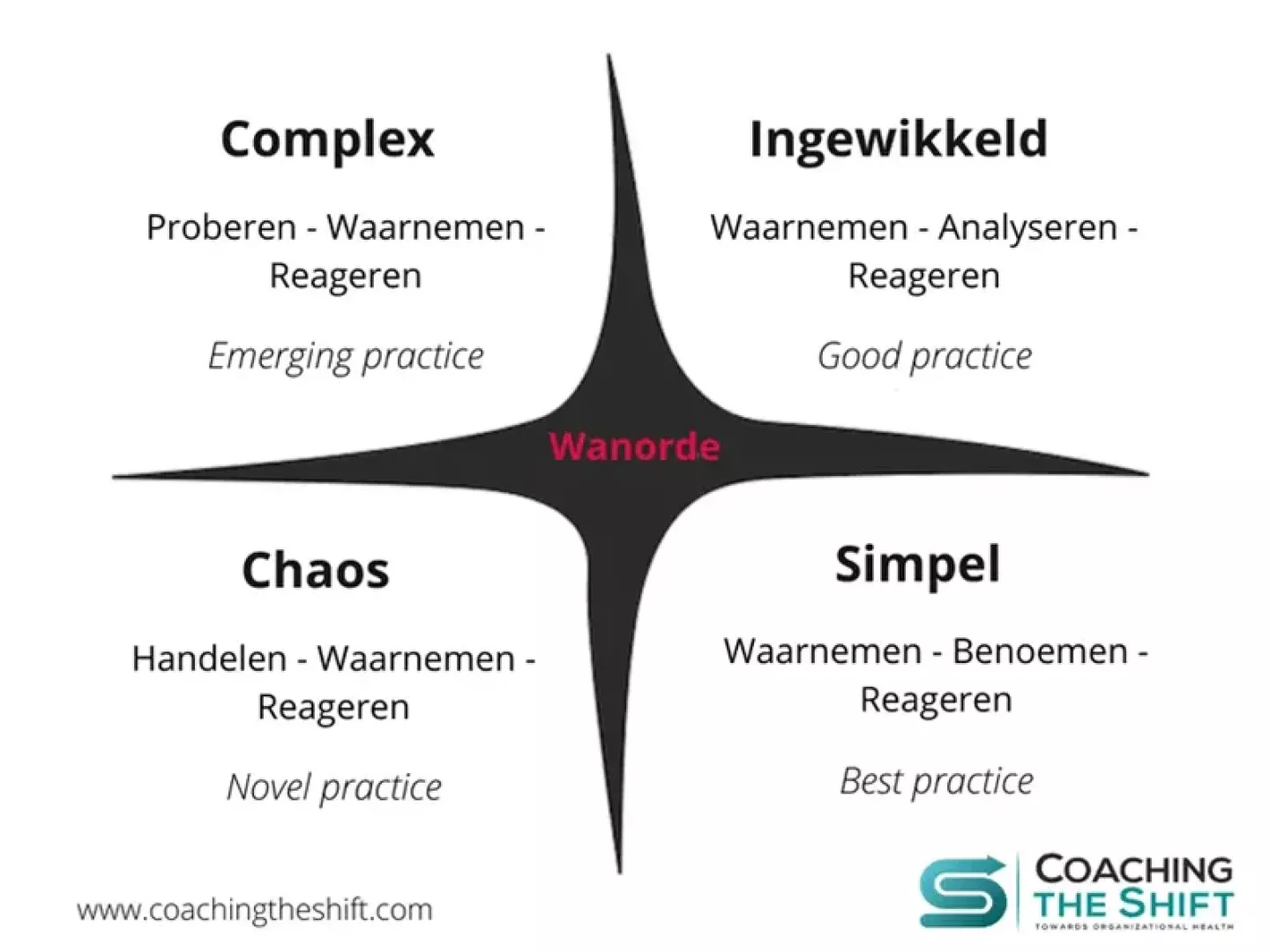
The 5W1H method is a universal questioning technique for exploring complex problems. It helps you build a more complete picture of the context before moving into advice. From these six core questions, you can continuously ask deeper follow-up questions.
- Intro – The participant presents their case and reframes it into a “How can I…?” question.
- 5W1H method – Who is involved? What is the problem? When does the problem occur? Why does it happen? How does the desired situation look?
- Shared practices – How can the problem be solved? Which practices does the group know?
- Evaluation – The group reflects on the insights and evaluates the intervision method.
7) Advice-only method
The advice-only method is a short but powerful intervision method that allows you to quickly gather advice from all participants. Ultimately, you decide which advice is relevant and what you want to work with.
- Intro – The participant presents their case and reframes it into a “How can I…?” question.
- Advice round – The group shares advice according to the share & drop principle.
- Presenter’s response – The presenter responds to the advice and explains how they want to work with it.
- Evaluation – The group reflects on the insights and evaluates the intervision method.
8) BONUS: the Balint method
Finally, there is the Balint method for (larger) groups with a minimum of 5 participants. This method is best reserved for more experienced intervision groups. It is important that participants have already built a certain level of trust and maturity. The Balint method also usually takes longer—about 1 to 2 hours.
- Collecting cases – Each participant prepares as many cases as possible.
- Generating interest – Recurring cases are brought forward and briefly introduced by one of the presenters.
- Case selection – The group decides which case they want to work on during the session.
- Facilitator – The group selects a facilitator to guide the intervision.
- Case presentation – The presenter provides more context about the case and the problem.
- Associations – Participants write down associative situations and experiences.
- Sense-making – The group asks clarifying questions to gain a clearer picture of the presenter’s context.
- Individual judgments – Each participant briefly writes down advice, suggestions, and conclusions.
- Group judgment – The group discusses the different perspectives and attempts to reach a general consensus, exploring both converging and diverging viewpoints.
- Presenter’s conclusion – The presenter forms their own conclusion and decides how to move forward with the insights.
- Evaluation – The group reflects on the insights and evaluates the intervision approach.
In short, there are many intervision methods that all help surface valuable insights. And the more experience you gain, the more you can play with the format and structure of your intervision. Above all, the key is to bring out the best in the group. To do so, you must create a safe environment built on openness and trust. Curious how? Discover our Masterclass Team Coaching!
Discover a wide range of intervision methods in our Masterclass Team Coaching and learn how to guide teams from A to Z!
Veelgestelde vragen over intervisie methoden
Inschrijven voor onze nieuwsbrief?
Other relevant articles