How do you recognize sabotage behavior in teams?
The sabotage line in action!
How do you recognize sabotage behavior in teams? People often tend to resist change. It is a natural response to internal resistance. Most of the time, we sabotage unconsciously, through subtle behavioral expressions that often seem small and harmless. But sometimes it is done consciously as well! In this blog, we explore sabotage behavior using models from Deep Democracy such as the iceberg, the sabotage line, and EDGE behavior.

Christine Esteingeldoir

How do you recognize (unconscious) sabotage behavior in teams? And in what way do you, as a leader or coach, contribute to this behavior yourself?
People often tend to resist change. This frequently happens unconsciously, through subtle behavioral expressions that may seem small and harmless. In this blog, we explore sabotage behavior using models from Deep Democracy such as the iceberg, the sabotage line, and EDGE behavior.
Discover in this blog how to tackle the problem at its root:
- Recognizing sabotage behavior in teams
- What is the sabotage line?
- Sabotage behavior in the undercurrent (Deep Democracy iceberg)
- What is EDGE behavior?
Recognizing sabotage behavior in teams
Sabotage behavior usually arises in situations where teams feel unheard, ignored, or neglected. For example, when a change process is imposed without any input or engagement from employees.
Sabotage behavior can sometimes be difficult to recognize because it appears very normal and harmless. Laughing something off, minimizing it, or simply ignoring it may seem minor, but it can be a symptom of a larger problem.
Ask yourself: from which intention and motivation does this sabotage behavior originate within the team? How aware is the team itself of this behavior? And how have I personally contributed to creating this situation?
- Conscious sabotage behavior:
Originates from the intention to sabotage. This usually stems from a feeling of loss of control and a lack of recognition. - Unconscious sabotage behavior:
Usually arises from fear, insecurity, or miscommunication. Think, for example, of procrastination, dependency, or cynicism.
The problem arises when this resistance remains invisible and therefore cannot be discussed within the team. In other words, the team does not dare to step into the tension. This ultimately leads to a vicious cycle in which every attempt at change fails. Every idea briefly surfaces only to sink again. As a result, the team gradually loses motivation, engagement, and trust.
What is the sabotage line?
The sabotage line is a model from Deep Democracy. It describes how teams (unconsciously and unintentionally) help maintain the current reality through sabotage behavior. The sabotage line illustrates this behavior along a spectrum.
On one side, you have covert sabotage behavior. These are subtle actions such as gossiping, sarcasm, and withholding communication. Covert sabotage behavior is often harder to recognize because it happens behind people’s backs, and the intention behind it is less clear. Over time, it can create a toxic work environment. A lack of open dialogue leads to mistrust and fear.

On the other hand, there is overt sabotage behavior. This behavior is easier to recognize because the confrontation is more direct. It takes place right in front of you. Think, for example, of contradicting others, striking, or simply refusing to cooperate. Without the right conflict-management skills, this can create problems within the team. It leads to frustration, reduced collaboration, and loss of productivity.
The sabotage line helps you recognize sabotage behavior and bring it above the waterline, making it discussable and workable.
Sabotage behavior in the undercurrent
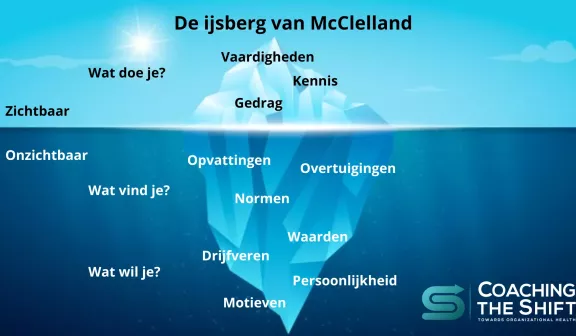
Deep Democracy describes these team dynamics using an iceberg metaphor. Above the waterline are all conscious processes, such as concrete agreements and explicitly stated norms and values. Below the waterline are unconscious processes, such as emotions and beliefs.
Sabotage behavior usually exists in the undercurrent of a team. The team says yes, but does no. At that moment, a gap arises between what happens above and below the waterline. People express their frustrations or needs through sabotage behavior in informal settings, but not at the moments when it truly matters.
This behavior quickly spreads throughout the organization and becomes an unspoken part of the culture. New team members soon adopt this behavior (often out of a desire to belong), gradually creating an unsafe work environment.
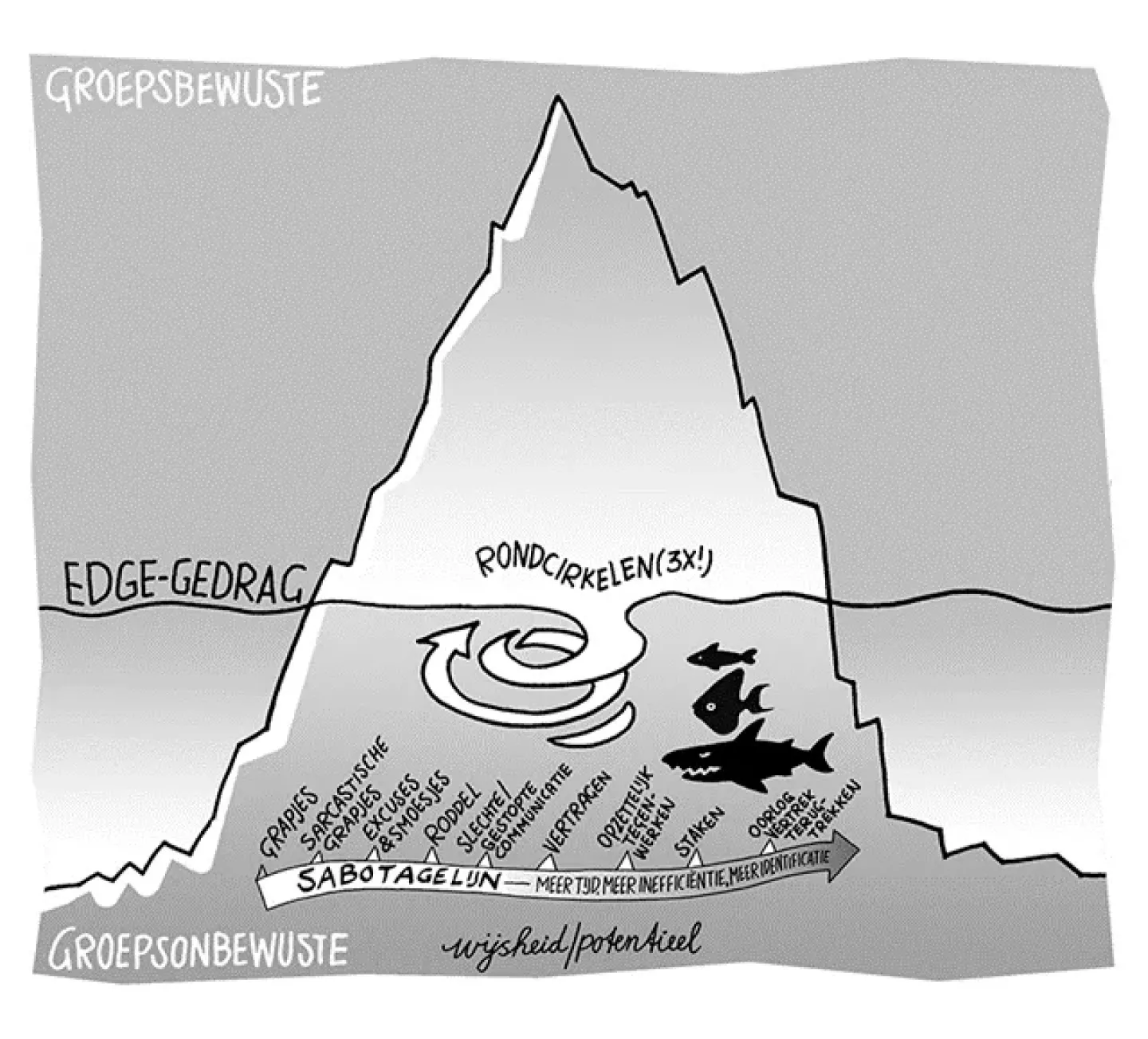
The power of team coaching lies in increasing collective awareness, allowing the hidden wisdom and potential of a team to emerge:
- Collective awareness: What exists within the group’s conscious awareness? Everyone knows what is happening above the waterline. What are the shared goals? Which conscious agreements are being followed?
- Undercurrent: What exists within the group’s unconscious? Which unconscious processes and team dynamics arise? What shared emotions and beliefs are present? Which unspoken norms and values does the team follow?
- Wisdom / potential: Teams possess enormous strength in the combined knowledge, experience, and perspectives of all team members, which can lead to genuinely innovative insights. However, this often remains in the undercurrent. What potential is currently untapped in your team?
When we do not dare to discuss sabotage behavior in the undercurrent, we remain standing at the edge of the waterline. We keep moving in vicious circles without results. Every change made above the waterline is undone in the undercurrent.
What is EDGE behavior?
EDGE behavior is sabotage behavior that takes place at the boundary of what is considered acceptable. This makes it difficult to determine whether the behavior is appropriate or not. Employees test the limits. It is important to recognize this behavior early so you can intervene in time. If you do not, the sabotage behavior will eventually become mainstream, leading to a toxic organizational culture.
EDGE behavior arises at the moment you begin to feel tension. You then face an important decision: do I make this discussable, or do I keep it in the undercurrent? In practice, however, the reptilian brain quickly takes over. Within 0.2 seconds, we unconsciously and unintentionally fall back into an automatic reaction.
This feeling is sometimes called displacement behavior. It is a defensive mechanism, similar to the fight–flight–freeze response, in which we (unconsciously) display sabotage behavior. This happens both in our personal development and within teams.
Dare to pause and ask yourself:
- Which sabotage behavior do you recognize in the team?
- How have I unconsciously and unintentionally contributed to creating this situation?
- How am I unconsciously and unintentionally helping to maintain the current reality?
- What is needed to make the undiscussable discussable again?
Would you also like to unlock the hidden potential of your team? It requires openness, courage, and commitment for a team to step into tension. But with the right dialogue and conflict-management skills, it leads to a more productive and healthier work environment. Discover how to deal with sabotage behavior and facilitate open dialogue in our Team Coaching Masterclass!
Veelgestelde vragen over sabotagegedrag
Inschrijven voor onze nieuwsbrief?
Other relevant articles