12 pitfalls of a team coach
What are the biggest pitfalls of a team coach? Are you a starting team coach or a coaching manager? Then you’re probably eager to support your team and prove your value as a team coach. But beware—there are several pitfalls you’re better off avoiding. Discover the 12 most common team coaching pitfalls in our blog!

Magaly De Smet

What are the 12 most common pitfalls of a team coach?
Are you a starting team coach or a coaching manager? Then you’re probably eager to help your team and prove your value as a team coach. But be careful—there are several pitfalls you’re better off avoiding.
Discover the 12 most common pitfalls for team coaches here:
- Entering with the wrong intention
- Failing to set a clear framework
- Playing the messenger
- Managing the communication traffic
- Losing multi-partiality
- Staying too superficial
- Stepping into the drama triangle
- Losing genuine curiosity
- Soothing or avoiding resistance
- Not clearly mapping the desired shift
- Becoming too self-confident or arrogant
- Perfectionism and avoiding pitfalls too much
- Bonus: focusing too much on tools and techniques
1) Entering with the wrong intention
Sometimes, as team coaches, we want to do such a good job that we enter a coaching process with the wrong intention. For example, we may be overly results-driven and rush through the coaching process. Our intention determines where we place our attention.
When you focus too much on achieving a result, you lose full presence. You become less alert and less receptive to things that fall outside your intention. Despite good intentions, this causes you to miss important opportunities.
2) Failing to set a clear framework
A professional framework is crucial for successful team coaching. As a coach, you often enter an existing team with established dynamics. Perhaps the leader has already shared some background information. A common pitfall is stepping into someone else’s framework.
Instead, take the time to properly arrive—both for yourself and for the team. Why are you here? What is your role as a team coach? What ground rules does the team need to ensure a safe environment?
3) Playing the messenger
As a team coach, you may unconsciously be used as a messenger for the group. The team sees you as a central figure and directs their messages to you. You listen actively and may hear more than what is explicitly said. You then bring this message back to the group in a constructive way.
However, when you continuously receive and redistribute messages, you prevent the team from developing their own communication skills. It is more effective to reflect this communication pattern back to the group. What lies beneath it?
4) Managing the communication traffic
As a team coach, you are not a messenger—but be careful not to become a traffic controller either. Your goal is to create open dialogue within the team. This means team members direct their questions and responses to the group, rather than waiting for your approval or green light.
People often think communication needs to be tightly managed. But a team coach does not decide who may speak and when. It is more effective to position yourself at the edge of the system. From there, you can observe the team’s communication and potentially notice parallel processes.
5) Losing multi-partiality
As a team coach, you are both impartial and multi-partial. In essence, this means treating everyone in the team as equal. You do not take sides with the leader, nor with quieter personalities in the group.
By observing what normally unfolds, you may notice a parallel process. Even then, you intervene only when intensity escalates or when a pattern becomes visible. A useful guideline here is the rule of three: if something happens once or twice, it may be coincidence. If you see it happen a third time—dare to reflect it back to the group.
6) Staying too superficial
Team coaches are not advisors. Yet many fall into the trap of staying at the content level. They respond to substantive questions, diagnose problems, or label issues. When this happens, the outcome is often nothing more than a solution to a symptom—rather than addressing the underlying dynamics.

Team coaches look beyond what is being said. They observe the dynamics within the team: how people speak, the tone and language they use, and the energy and posture the team brings into the session.
7) Stepping (along) into the drama triangle
Human beings are social creatures, and as a result, team coaches can unconsciously step into the drama triangle. For example, by aligning with the group’s drama behavior. You might slip into the rescuer role when you want to protect someone, or join in with the team’s complaining about a leader.

8) Losing genuine curiosity
Another pitfall for team coaches is believing that you already see the answer. When that happens, you partially lose your curiosity. You may start asking more suggestive questions to steer the team in a certain (desired) direction—but that doesn’t work.
For a successful shift to occur, the solution must come from the team itself. It has to be their own choice. And sometimes, teams need to experience certain things for themselves. You can’t push or pull them into change. That is precisely what enables teams to grow independently over time.
9) Soothing or avoiding resistance
Sometimes it is assumed that a team coach’s role is to keep the mood positive within the group. But that is a misconception. By soothing the group or shutting things down, you miss the opportunity for a constructive dialogue. This is one of the major pitfalls for team coaches.
It takes courage to mirror, confront, and name what is happening in the room. That is why it is important to welcome resistance. Dare to look beyond what is immediately visible. What is this incident a symptom of? What lies beneath it?
10) Not clearly mapping the desired shift
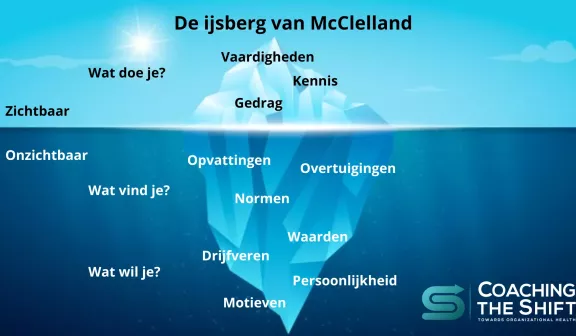
It is essential to develop a clear, shared vision of where the team wants to evolve toward. What are the underlying drivers? What obstacles are standing in the way? And above all—what lies below the waterline?

Without a clear shift, it becomes difficult to make progress. It’s like navigating without a destination—you keep going in circles, without a clear end goal. Sometimes, something new emerges during the trajectory. In those cases, it may be appropriate to re-contract with the client and/or the team leader to realign expectations and direction.
11) Becoming too self-confident—or arrogant
Finally, a team coach can also become too self-confident. When you are so convinced of your own perspective that you are no longer open to anything else, self-confidence turns into arrogance. You can compare it to a wall: all feedback or suggestions simply bounce off.
This mechanism often arises from self-protection. However, it manifests as distrust and closedness—qualities that tend to block communication and learning within a team.

12) Perfectionism and avoiding pitfalls too much
After reading all these pitfalls, you might think: “Uh-oh, I really need to watch out for this!” When you become overly focused on avoiding every possible pitfall as a team coach, your intention shifts in the wrong direction. While it’s useful to be aware of what can go wrong, try not to fixate on it.
Making mistakes is normal. Focusing too much on avoiding them causes you to miss what is actually emerging in the team—and you may end up going in circles. Instead, choose a positive intention.
13) BONUS: focusing too much on tools and techniques
While coaching tools, techniques, and models add great value in terms of structure, knowledge, and a coach’s confidence, the real value lies in the coach’s presence. That presence can only be achieved through genuine active listening and by fully surrendering to the moment.

After training more than a hundred team coaches at Coaching The Shift, we know the pitfalls team coaches can encounter better than anyone. In addition to more than 16 open editions of our Masterclass Team Coaching, this 7-day program has also been delivered multiple times within organizations such as Daikin, Volvo, Liantis, Securex, Opgroeien, Infrabel, AZ Delta, and De Lijn. Could this be something for your organization too?
Veelgestelde vragen over
12 valkuilen van een teamcoach
Other relevant articles